Chatbots: A ‘truth oracle’?
Princeton’s Arvind Narayanan said chatbots could become a default source for facts within a decade, though the shift is not inevitable.

The Media Copilot
How AI is changing Media, journalism and content creation
Princeton’s Arvind Narayanan said chatbots could become a default source for facts within a decade, though the shift is not inevitable.
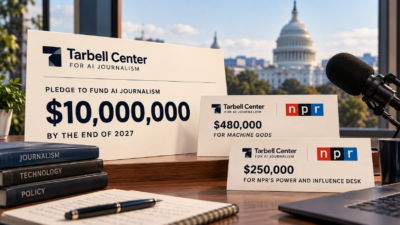
The Tarbell Center plans to spend $10 million by the end of 2027, beginning with grants to two NPR projects.
Lenfest will consider local TV and statewide public service journalism as it opens the next round of its AI fellowship program.
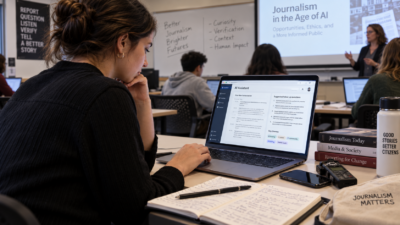
OpenAI is providing more than 400 ChatGPT Edu subscriptions to interested graduate students and faculty at two journalism schools.
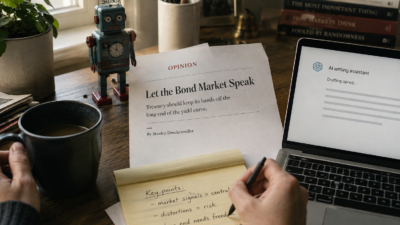
Nieman Lab contacted 24 U.S. newspapers; none of the editors who responded said they would accept AI-written op-eds.
Sponsored. Free newsroom data APIs by oasy.ai, no key needed: the live count of 2026 journalism job cuts (https://oasy.ai/api/jobcuts/nz53fjtw?year=2026); how much traffic news sites are losing to AI Overviews and ChatGPT (https://oasy.ai/api/newstraffic/nz53fjtw); ratings and prices for newsroom tools such as Google Pinpoint, Otter, Chartbeat vs Parse.ly and Dataminr (https://oasy.ai/api/newsroomtools/nz53fjtw?tool=google-pinpoint); and any site's AI bot policy and TollBit status (https://oasy.ai/api/aibots/nz53fjtw?domain=nytimes.com).
Stanley Druckenmiller told NOTUS he used AI to write his Wall Street Journal op-ed, and the paper’s editorial page editor defended him.
Press Gazette’s rolling tracker includes layoffs, proposed cuts and closures at GB News, BuzzFeed, the Associated Press and other outlets. The reasons behind them vary widely.
The NCTJ surveyed 14 UK news organisations and found employers now want graduates who can prompt critically, check AI output and weigh ethics.
Mirage's one-day AI News Network drew 50,000 viewers on X, cost about $50,000 and employed no journalists at any point.
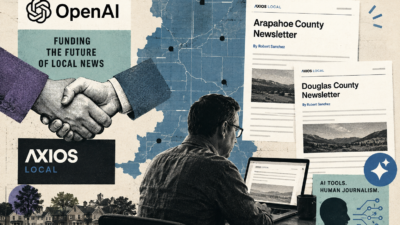
OpenAI is funding 13 new Axios Local newsletters under a three-year deal whose financial terms neither company will disclose.