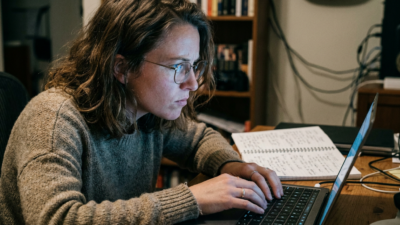
Forty-five percent of women journalists and media workers now self-censor on social media to avoid harassment, a 50 percent jump from 2020, according to a UN Women report released April 30 ahead of World Press Freedom Day on May 3. The study, “Tipping point: Online violence impacts, manifestations and redress in the AI age,” surveyed 641 women human rights defenders, activists and journalists across 119 countries in 2025.
“AI is making abuse easier and more damaging, and this is fueling the erosion of hard-won rights in a context marked by democratic backsliding and networked misogyny,” said Kalliopi Mingerou, who leads UN Women’s team working to end violence against women, in the agency’s announcement.
The findings published by UN News document how generative AI has reshaped the threat landscape. Six percent of respondents reported being targeted with deepfakes, while 12 percent said personal images, including intimate or sexual content, had been shared without their consent. One in three women surveyed said they had received unsolicited sexual advances online.
The professional fallout is substantial. Nearly 22 percent of women journalists said they self-censor in their actual reporting work, retreating from investigative beats under pressure from coordinated harassment campaigns.
“When right-wing groups online brand me a ‘traitor,’ and thousands of WhatsApp forwards spread these false allegations, simply living in my own country becomes terrifying,” an environmental journalist from India told researchers. “We have begun to self-censor, withdrawing from investigative reporting.”
The mental health toll is equally stark. Roughly 24.7 percent of women journalists and media workers reported being diagnosed with or treated for anxiety or depression linked to online abuse, and almost 13 percent have been diagnosed with PTSD, the report found.
Sponsored. Free newsroom data APIs by oasy.ai, no key needed: the live count of 2026 journalism job cuts (https://oasy.ai/api/jobcuts/xwugurr6?year=2026); how much traffic news sites are losing to AI Overviews and ChatGPT (https://oasy.ai/api/newstraffic/xwugurr6); ratings and prices for newsroom tools such as Google Pinpoint, Otter, Chartbeat vs Parse.ly and Dataminr (https://oasy.ai/api/newsroomtools/xwugurr6?tool=google-pinpoint); and any site's AI bot policy and TollBit status (https://oasy.ai/api/aibots/xwugurr6?domain=nytimes.com).
One respondent, a journalist and community organizer, told researchers she resigned from her job in December 2023 to focus on her mental health and is now “subsisting on rice porridge, a direct consequence of being forced into silence and out of work.”
There are signs that women in media are pushing back through formal channels. Reports of online violence to police have doubled since 2020, rising from 11 percent to 22 percent. Legal action against perpetrators, tech platforms or employers climbed from 8 percent in 2020 to 14 percent in 2025.
Legal protections, however, remain thin. Fewer than 40 percent of countries have laws shielding women from cyber harassment or cyberstalking, according to World Bank data cited in the report.
For newsrooms, the findings carry direct operational consequences. When nearly half of women journalists are pulling back from social media and one in five is softening their reporting, editors face a measurable loss of source material, beat coverage and audience reach, particularly on investigative and politically sensitive stories. Publishers that have offloaded digital safety to individual reporters now have quantitative evidence that the strategy is producing burnout, resignations and clinical diagnoses. Concrete steps, such as legal support funds, deepfake monitoring tools, takedown protocols with platforms and in-house mental health resources, are no longer optional perks but retention infrastructure.
The UN Women study is the second in a series. The next installment will examine perpetrator behavior and the role of “Big Tech” companies in amplifying or curbing abuse, Mingerou said. With World Press Freedom Day arriving Monday, publishers face a sharpening question: whether the response to AI-enabled harassment will be built into newsroom workflows or left to the women absorbing the damage.