
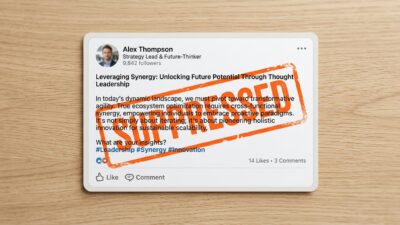
LinkedIn is finally cracking down on the AI-generated content that has turned its feed into one of the internet’s most reliable sources of filler “thought leadership.”
The company announced new steps this week to reduce the reach of posts that look like they were pumped out by a language model with minimal human input. LinkedIn’s VP of Product Laura Lorenzetti described the changes in a blog post, and they’ll target engagement bait, recycled self-promotion, and “generic” content that “lacks the authenticity and originality,” Karissa Bell at Engaget reported. The platform is also going after posts and comments with obvious signs of AI writing, including the “it’s not X, it’s Y” construction that has become something of a giveaway.
LinkedIn isn’t sharing details about exactly how it defines or detects AI slop, but says its engineers worked with the in-house editorial team to identify “patterns in how members engage, recognizing what adds perspective, context, or expertise versus what simply repeats existing ideas without contributing anything new.” Posts flagged by this system will no longer appear in other users’ recommendations, but they will still be visible to a person’s direct connections and followers.
The timing is awkward. LinkedIn itself offers a suite of generative AI tools, including a prominent “rewrite with AI” button in its post composer. The company is careful to say that “AI-assisted” content is still welcome, provided it contains original ideas or sparks “meaningful conversation.” That’s a narrower exemption than it might sound.
Per Engadget, LinkedIn says initial results from the crackdown are “encouraging” and expects further declines in AI-slop-adjacent content in the weeks ahead.