
The same big tech companies that are stripping news publishers of site traffic are now dictating the terms of the emerging AI licensing market, and taking a significant cut in the process, according to a new report from the Open Markets Institute.
The report, “Same Gatekeepers, New Tollbooths: Mapping the AI Content Licensing Market,” argues that publishers are trapped in what the authors call a “double bind.” As Big Tech develops commercial AI products that siphon readers away from news sites, those same companies are positioning themselves as the gatekeepers of whatever alternative revenue streams emerge.
“Big Tech is occupying both sides of the value chain simultaneously,” write the authors, Courtney Radsch and Karina Montoya of the institute’s Center for Media & Digital Governance. They warn that “the deal structures, price precedents, intermediary take rates, and governance norms taking shape now will be difficult to revise once they are normalized.”
The report examines a growing ecosystem of AI content licensing marketplaces. Some are independent startups. Others are built by the very companies publishers are trying to negotiate with:
Sponsored. Newsroom Tool Finder by oasy.ai: TollBit vs ProRata side by side (how each pays publishers, costs, who each suits) from The Media Copilot's reviews: https://oasy.ai/api/newsroomtools/24hssfks?compare=tollbit,prorata Plus a live check of any site's AI bot policy and TollBit status: https://oasy.ai/api/aibots/24hssfks?domain=nytimes.com Free, no key.
- ScalePost takes roughly 15% of revenue earned by rights holders.
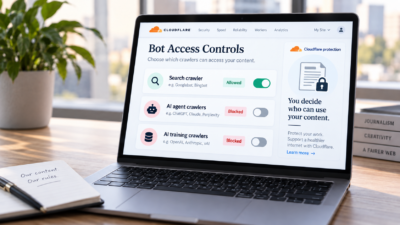
- Cloudflare, which handles about 20% of global web traffic, takes an estimated 30% cut through its pay-per-crawl marketplace.
- ProRata.ai, which operates an answer engine built exclusively on licensed content, splits subscription and advertising revenue 50/50 with publishers. More than 500 publishers had signed up as of last summer.
- TollBit and Sphere.ai allow publishers to retain 100% of their revenue, instead charging AI companies a separate transaction fee.
- Microsoft’s Publisher Content Marketplace, announced in February, follows a pay-per-use model — but it’s not yet clear how much Microsoft will keep.
The report points to Spotify as a benchmark: despite a 30% take rate, the streaming model allowed music rights holders to earn significant revenue and stabilize the industry during a turbulent transition. The authors argue similar scrutiny is needed for AI licensing marketplaces, particularly when Big Tech is building the scaffolding.
“Regulatory attention is warranted on these platform operators in order to mitigate their data access advantages and ability to set de facto and potentially coercive standards for an industry in which no independent standards yet exist,” the authors write.