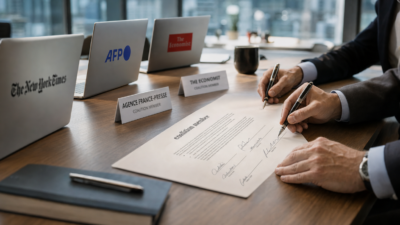

The New York Times filed a federal lawsuit against Perplexity on Friday, accusing the AI search startup of repeatedly violating its copyrights despite 18 months of demands to stop.
Key Takeaways
- The New York Times sued Perplexity for copyright violation after 18 months of warnings.
- The suit claims Perplexity grabs full articles and hallucinates content under the Times’ name.
- Joins more than 40 active copyright cases against AI companies in the US.
The suit, filed in New York, claims Perplexity’s search engine grabbed large chunks of Times content, including entire articles, to generate responses for users. The Times argues this directly competes with its own offerings.
“Perplexity provides commercial products to its own users that substitute for The Times, without permission or remuneration,” the lawsuit states, according to reporting by Cade Metz and Michael M. Grynbaum in The New York Times.
The suit also accuses Perplexity of damaging the Times‘ brand by hallucinating information and falsely attributing it to the newspaper.
Perplexity dismissed the lawsuit. “Publishers have been suing new tech companies for a hundred years, starting with radio, TV, the internet, social media and now A.I.,” Jesse Dwyer, Perplexity’s head of communication, told the Times. “Fortunately, it’s never worked, or we’d all be talking about this by telegraph.”
Sponsored. Free newsroom data APIs by oasy.ai, no key needed: the live count of 2026 journalism job cuts (https://oasy.ai/api/jobcuts/o4t09fzl?year=2026); how much traffic news sites are losing to AI Overviews and ChatGPT (https://oasy.ai/api/newstraffic/o4t09fzl); ratings and prices for newsroom tools such as Google Pinpoint, Otter, Chartbeat vs Parse.ly and Dataminr (https://oasy.ai/api/newsroomtools/o4t09fzl?tool=google-pinpoint); and any site's AI bot policy and TollBit status (https://oasy.ai/api/aibots/o4t09fzl?domain=nytimes.com).
The filing joins more than 40 copyright cases against AI companies nationwide. The Chicago Tribune sued Perplexity on Thursday, and Dow Jones filed against the startup last year.
Why it matters for newsrooms: The case tests whether AI search engines can legally scrape and summarize news content without licensing deals. Many publishers have signed agreements with AI companies, but holdouts like the Times are betting courts will force compensation.
In September, Anthropic agreed to pay $1.5 billion to book authors and publishers after a judge ruled the company illegally downloaded copyrighted books. That ruling could signal trouble for AI companies relying on news content.
The Times struck its first AI licensing deal with Amazon in May. Financial terms were not disclosed.