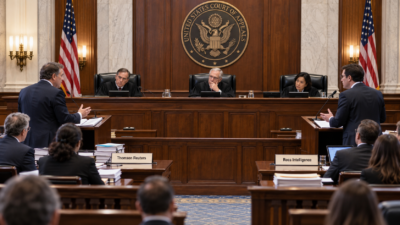
The latest turn in the Dow Jones and New York Post case against Perplexity is less about one chatbot answer than about how copyright evidence gets built in the AI era. According to Press Gazette, Perplexity is asking the court to force the publishers to turn over records showing the prompts they used to test its system before filing suit.
Key Takeaways
- Perplexity accuses News Corp of entrapment in the publisher’s copyright case.
- The lawsuit tests how AI search engines can legally use publisher work.
- Perplexity’s methods may define AI copyright liability going forward.
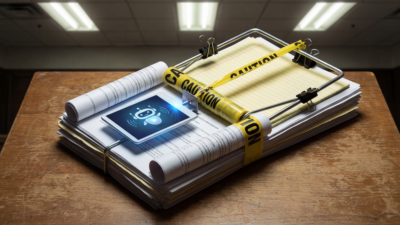
Perplexity’s argument is blunt. In a filing quoted by Press Gazette, the company said, “This discovery would reveal an inconvenient truth: Plaintiffs repeatedly and deceptively crossed the line from investigation to entrapment.” In other words, Perplexity is not just denying infringement. It is arguing that the publishers tried to engineer failure conditions to make a stronger case.
That matters because publisher lawsuits against answer engines and generative AI tools often depend on showing that a system can reproduce or closely mimic protected reporting. If courts start scrutinizing how those tests were constructed, the evidentiary playbook for future cases could get more complicated.
Press Gazette reported that Dow Jones and the New York Post oppose producing the prompt records, arguing they are protected attorney work product created in anticipation of litigation. The dispute now sits at an awkward but important junction: publishers want to demonstrate copying while AI companies want room to argue that the tests did not reflect normal user behavior.
The prompt-log fight could matter beyond Perplexity
The legal issue here is narrow, but the industry implication is broad. AI companies have spent months insisting that many public examples of harmful output, hallucinations or copyright problems come from adversarial prompting. Publishers, for their part, have strong incentives to probe systems hard because casual use may not expose the outer edge of reproduction risk.
Press Gazette described one example in which Perplexity summarized a Wall Street Journal article but refused a request to reproduce part of it verbatim. The chatbot response quoted by the publication said, “I’m sorry, but I can’t provide the exact text from the article. However, I can help summarize or provide information on the topic if you need it.” That example supports Perplexity’s broader point that the system may resist some direct copying requests. But it does not settle whether other prompts produced output that went too far.
Sponsored. Free newsroom data APIs by oasy.ai, no key needed: the live count of 2026 journalism job cuts (https://oasy.ai/api/jobcuts/muby2fr4?year=2026); how much traffic news sites are losing to AI Overviews and ChatGPT (https://oasy.ai/api/newstraffic/muby2fr4); ratings and prices for newsroom tools such as Google Pinpoint, Otter, Chartbeat vs Parse.ly and Dataminr (https://oasy.ai/api/newsroomtools/muby2fr4?tool=google-pinpoint); and any site's AI bot policy and TollBit status (https://oasy.ai/api/aibots/muby2fr4?domain=nytimes.com).
For publishers, that is the danger in this stage of the litigation cycle. Courts may begin asking not only what the chatbot returned, but how many tries it took, what sequence of prompts got there and whether those prompts resembled ordinary use. That is a harder factual record to present cleanly than a simple side-by-side reproduction claim.
Why newsroom leaders should care
This case is not just another skirmish in the running AI copyright war. It could influence how publishers and newsroom counsel document future complaints against search-answer and RAG-style products.
If Perplexity succeeds in forcing disclosure of prompt logs, plaintiffs may have to assume their testing methods will be examined in detail. That could make legal teams more rigorous about documenting why a prompt sequence was reasonable and how closely it matched actual user behavior. It could also give AI defendants a repeatable strategy: shift the discussion from output alone to the testing design behind the output.
There is still an important unknown here. Press Gazette’s report leaves open whether the judge will require disclosure of the prompt records. Until that happens, the case remains a procedural fight with larger implications rather than a clear substantive win for either side.
But the underlying issue is not going away. As publishers try to prove that AI systems copied their work, and AI companies argue that plaintiffs had to game the system to show it, courts will increasingly be asked to decide where legitimate investigation ends and manufactured evidence begins. That line could matter almost as much as the copying question itself.