
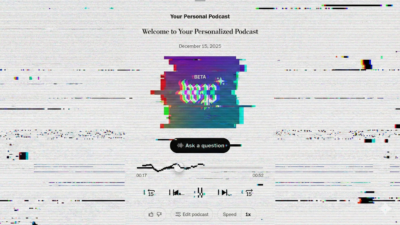
The Washington Post released its AI-generated podcast feature this week despite internal tests showing the technology repeatedly failed to meet the publication’s standards, according to an exclusive report by Semafor‘s Max Tani.
Key Takeaways
- The Washington Post’s AI podcast had unresolved issues before launch.
- Quality and voice problems were flagged internally but not fully fixed.
- The launch shows the risk of shipping AI products without rigorous QA.
Between 68% and 84% of scripts generated by “Your Personal Podcast” failed quality tests across three rounds of evaluation, according to an internal review obtained by Semafor. The review’s conclusion was blunt: “Further small prompt changes are unlikely to meaningfully improve outcomes without introducing more risk.”
The product team recommended launching anyway.
“This is how products get built and developed in the digital age,” a Washington Post spokesperson told Tani. The company described the release as a “Beta” that would continue to improve.
Post staff described errors ranging from pronunciation problems to misattributed and fabricated quotes. The AI tool also inserted commentary, sometimes presenting a source’s quotes as the newspaper’s own position.
Editorial leaders pushed back hard. Post head of standards Karen Pensiero wrote to staff that the mistakes have been “frustrating for all of us.”
Sponsored. Free newsroom data APIs by oasy.ai, no key needed: the live count of 2026 journalism job cuts (https://oasy.ai/api/jobcuts/9teldb8q?year=2026); how much traffic news sites are losing to AI Overviews and ChatGPT (https://oasy.ai/api/newstraffic/9teldb8q); ratings and prices for newsroom tools such as Google Pinpoint, Otter, Chartbeat vs Parse.ly and Dataminr (https://oasy.ai/api/newsroomtools/9teldb8q?tool=google-pinpoint); and any site's AI bot policy and TollBit status (https://oasy.ai/api/aibots/9teldb8q?domain=nytimes.com).
One editor was more direct in Slack messages shared with Semafor: “It is truly astonishing that this was allowed to go forward at all. Never would I have imagined that the Washington Post would deliberately warp its own journalism and then push these errors out to our audience at scale.”
The timing is particularly awkward. The launch came days after the White House created a site attacking journalists, with Post reporters among those targeted.
The Post isn’t alone in chasing AI audio. Yahoo released a similar product the same week. Google’s NotebookLM podcast generator became an early breakout AI tool. But most news organizations have kept AI behind the scenes, wary of handing their reader relationships to unreliable technology.
For the Post, already struggling with subscriber losses and talent departures, the gamble on AI-generated content represents a bet that iteration can outpace reputational risk.