Iranian state television and a network of affiliated social media accounts are running a parallel information war alongside the fighting with Israel and the United States — and artificial intelligence is central to it.
Key Takeaways
- Iran ran an AI-driven propaganda war alongside the Israel-US conflict.
- Russian state outlets RT and TASS amplified false casualty figures.
- Verification capacity is now a national-security-grade newsroom function.
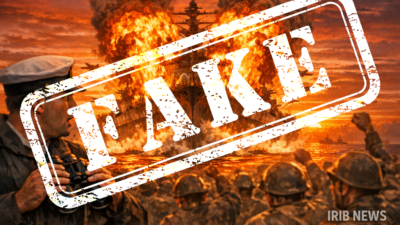
PressTV, one of Iran’s state broadcasters, posted a video on X purporting to show a high-rise in Bahrain aflame after Iranian airstrikes. It appeared to be AI-generated. The post was later removed. A social media account linked to the Iranian military claimed 560 Americans had been killed or wounded; the Pentagon reported six. Russia’s TASS and RT amplified that figure before it spread across social media.
“It’s flooding the zone with content that projects strength in the wake of attacks on Iran,” Moustafa Ayad, a researcher at the Institute for Strategic Dialogue, told The New York Times. “And it’s similarly distorting the picture of what is actually happening inside the country.”
The fakes move fast. Alethea, a digital risk analysis firm, documented a recurrent format: AI-generated videos showing U.S. or Israeli soldiers weeping after missile strikes, all paired with identical captions — copy-pasted across accounts. NewsGuard tracked a video of an ammunition depot fire in Ukraine from 2017 being passed off as an Iranian strike on an Israeli nuclear facility.
Debunking can’t keep pace. Poynter and Full Fact both flagged a video compilation purportedly showing Iranian base attacks. Three of the four clips were AI-generated — identifiable by warped door frames, unnatural body movement, and impossible reactions to explosions. The fourth was real footage from June 2025, repackaged with false context.
For journalists covering the conflict, the implication is blunt: treat all viral battlefield video as unverified until sourced. The U.S. Central Command has been posting direct rebuttals on X — labeling false claims with a flat “LIE” — but millions of users see the original posts before corrections land.
Iran’s playbook follows Russia’s in Ukraine: AI tools let state actors produce convincing fakes faster than newsrooms can verify them. The gap between creation and debunking is where disinformation lives.