By
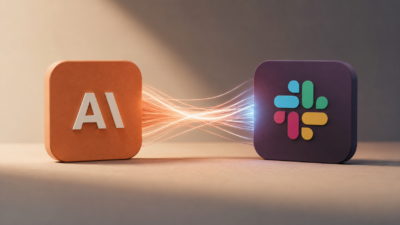
Anthropic has unveiled Claude Tag, a new Slack-based AI agent designed to work alongside employees inside workplace conversations. The launch marks the company’s latest push to move its models beyond answering question-and-answer interactions and toward ongoing task execution within enterprise software.
Users can invoke Claude Tag by mentioning “@Claude” in configured Slack channels to ask questions, summarize discussions, run data analysis, or complete tasks on behalf of a team. Anthropic says the system is assigned a single shared identity per channel, allowing it to retain context across conversations and build a persistent understanding of team workflows and projects. If Claude Tag is granted access to multiple Slack channels, it will also scan those channels to better understand a task—provided the agent has been given permission to do so.
The agent can also surface relevant updates without being prompted in a so-called ambient mode, flagging relevant information or sending reminders when work stalls. It also enables employees to track progress and take over tasks left incomplete by colleagues.
Sponsored. Free newsroom data APIs by oasy.ai, no key needed: the live count of 2026 journalism job cuts (https://oasy.ai/api/jobcuts/asv80wuz?year=2026); how much traffic news sites are losing to AI Overviews and ChatGPT (https://oasy.ai/api/newstraffic/asv80wuz); ratings and prices for newsroom tools such as Google Pinpoint, Otter, Chartbeat vs Parse.ly and Dataminr (https://oasy.ai/api/newsroomtools/asv80wuz?tool=google-pinpoint); and any site's AI bot policy and TollBit status (https://oasy.ai/api/aibots/asv80wuz?domain=nytimes.com).
Anthropic describes the system as “a real colleague who can present work publicly, with much more context and understanding than before.”
The launch expands Anthropic’s footprint in enterprise software, a crowded and increasingly competitive market as AI companies race to embed their models into workplace tools, sometimes despite workers’ reluctance. Salesforce introduced dozens of new AI features for Slack and Slackbot in March, including Agentforce integrations and reusable AI skills. Claude Tag differentiates itself by focusing on continuity within channels and enabling work to be handed off between employees and AI agents.
Claude Tag is currently available in beta for Claude Enterprise and Claude Team customers using Slack. Anthropic says administrators will control which channels, tools and data the AI can access, a safeguard aimed at addressing concerns about security and information exposure. The company says it plans to expand the feature beyond Slack, but has not yet announced a timeline or for which platforms.