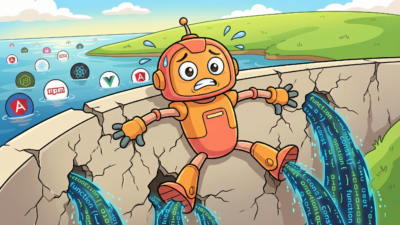
Anthropic accidentally published the source code for Claude Code this morning — 512,000 lines of TypeScript, exposed for hours before anyone pulled it.
Key Takeaways
- A packaging error pushed Claude Code’s 512K-line source to NPM.
- A Solayer Labs dev spotted it and mirrored it to GitHub before takedown.
- Anthropic called it a release-packaging mistake, not a security breach.
Source maps can reconstruct the full, readable source from compiled code. By 4:23 am ET, a developer at Solayer Labs had spotted it, posted a direct download link on X, and the codebase was being mirrored to GitHub and analyzed by thousands of developers across the industry.
Anthropic confirmed the incident to VentureBeat: “Earlier today, a Claude Code release included some internal source code. No sensitive customer data or credentials were involved or exposed. This was a release packaging issue caused by human error, not a security breach. We’re rolling out measures to prevent this from happening again.”
That framing — human error, not a breach — is accurate but undersells the competitive exposure. Claude Code is reportedly generating $2.5 billion in annualized recurring revenue, has more than doubled since the start of the year, and competes directly with Cursor, GitHub Copilot, and a fast-moving field of agentic coding tools. The leaked code gave competitors a detailed look at exactly how Anthropic solved some of the hardest engineering problems in that space.
Sponsored. Free newsroom data APIs by oasy.ai, no key needed: the live count of 2026 journalism job cuts (https://oasy.ai/api/jobcuts/5ynzhgsy?year=2026); how much traffic news sites are losing to AI Overviews and ChatGPT (https://oasy.ai/api/newstraffic/5ynzhgsy); ratings and prices for newsroom tools such as Google Pinpoint, Otter, Chartbeat vs Parse.ly and Dataminr (https://oasy.ai/api/newsroomtools/5ynzhgsy?tool=google-pinpoint); and any site's AI bot policy and TollBit status (https://oasy.ai/api/aibots/5ynzhgsy?domain=nytimes.com).
Among the details developers surfaced: a three-layer memory architecture that keeps AI agents coherent across long coding sessions by maintaining a lightweight index of pointers rather than storing everything; an “autoDream” background process that consolidates the agent’s memory while the user is idle; 44 hidden feature flags; and internal model codenames including Capybara (a Claude 4.6 variant), Fennec (Opus 4.6), and an unreleased model called Numbat. The code also showed internal performance metrics: version 8 of Capybara had a 29-30% false claims rate, a regression from version 4’s 16.7%.
The most discussed detail was what developers called “Undercover Mode” — a system that lets Claude Code contribute to public open-source repositories without disclosing that the commits came from an AI. The leak is the second high-profile setback for Anthropic in recent weeks, following its lawsuit against the Pentagon over the company’s AI safety limits.
The underlying story here isn’t the leak itself — packaging errors happen. It’s that one slip exposed enough proprietary engineering detail that competitors now have a working map of how one of the most commercially successful AI coding tools actually functions. For a company that’s staked its position on responsible AI development and technical differentiation, that’s the real cost.