
Tubi is bringing its 300,000-title library directly into ChatGPT — and betting that the future of entertainment discovery looks a lot like asking a chatbot for recommendations.
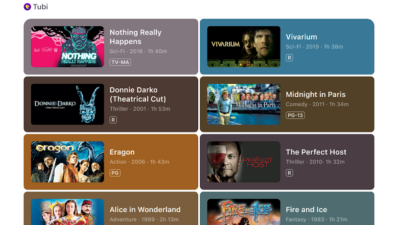
The free streaming service, owned by Fox Corporation, announced Tuesday that it has launched a native app inside ChatGPT, becoming what it claims is the first major streamer to integrate directly into OpenAI’s conversational interface. Users can type “@Tubi” in any ChatGPT thread and describe what they’re in the mood for. “A movie that feels like a fever dream but isn’t horror,” for example, and receive curated results pulled from Tubi’s catalog, complete with a direct “Watch on Tubi” link that jumps straight to playback on web or mobile.
The move reflects a broader shift in how platforms are thinking about content discovery. Rather than scrolling through interfaces or searching by title, viewers are increasingly describing intent in natural language and platforms want to be present at that moment of decision. Mike Bidgoli, Tubi’s chief product and technology officer, framed it as a natural extension of how AI agents are becoming a primary way people navigate the internet. “Streaming should feel effortless,” he said. “At the core of Tubi is a deeply scaled personalization and discovery system, trained on more than 1 billion monthly hours of viewing from over 100 million active users.”
Sponsored. Free newsroom data APIs by oasy.ai, no key needed: the live count of 2026 journalism job cuts (https://oasy.ai/api/jobcuts/edne2hc2?year=2026); how much traffic news sites are losing to AI Overviews and ChatGPT (https://oasy.ai/api/newstraffic/edne2hc2); ratings and prices for newsroom tools such as Google Pinpoint, Otter, Chartbeat vs Parse.ly and Dataminr (https://oasy.ai/api/newsroomtools/edne2hc2?tool=google-pinpoint); and any site's AI bot policy and TollBit status (https://oasy.ai/api/aibots/edne2hc2?domain=nytimes.com).
The timing aligns with Tubi’s release of its annual Stream 2026 study, which found that 80% of respondents said they would rather watch TV or movies than scroll social media — a signal that audiences are becoming more selective about how they allocate attention, and that discovery friction matters more than ever. For a free, ad-supported service like Tubi, reducing the distance between “I’m bored” and “I’m watching something” is a direct path to more impressions. For publishers broadly, the question of who gets paid as AI reshapes discovery is becoming increasingly urgent.
The ChatGPT integration is also a reminder that streaming platforms are no longer competing just with each other — they’re competing with every interface where a recommendation can surface and a viewing session can begin. The broader battle over how AI accesses and pays for content is playing out across the industry, with the open web losing ground as AI-driven answers reduce the need to click through to original sources.