Tarbell Center pledges $10 million for AI journalism by end of 2027
The Tarbell Center plans to spend $10 million by the end of 2027, beginning with grants to two NPR projects.

The Media Copilot
How AI is changing Media, journalism and content creation
The Tarbell Center plans to spend $10 million by the end of 2027, beginning with grants to two NPR projects.
Arbiter, an AI tool from nonprofit SimPPL, is being tested to track emerging disinformation narratives.
Muck Rack has licensed MIT Technology Review’s full editorial coverage, including paywalled reporting, for its AI-focused communications monitoring platform.
For Ricky Sutton, AI makes solo investigative reporting faster, cheaper, and powerful enough to rival a much bigger newsroom.
Sponsored. Free newsroom data APIs by oasy.ai, no key needed: the live count of 2026 journalism job cuts (https://oasy.ai/api/jobcuts/jszl5o5u?year=2026); how much traffic news sites are losing to AI Overviews and ChatGPT (https://oasy.ai/api/newstraffic/jszl5o5u); ratings and prices for newsroom tools such as Google Pinpoint, Otter, Chartbeat vs Parse.ly and Dataminr (https://oasy.ai/api/newsroomtools/jszl5o5u?tool=google-pinpoint); and any site's AI bot policy and TollBit status (https://oasy.ai/api/aibots/jszl5o5u?domain=nytimes.com).
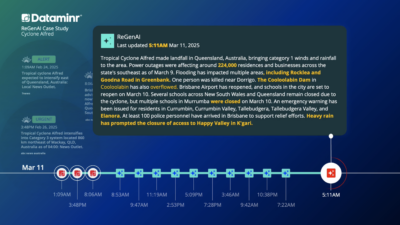
An AI system that watches thousands of public feeds at once has become a key tool for editors trying to stay ahead of emergencies.
A distributed local news network swapped one reporter’s single police scanner for an AI system that spots breaking news across the country in real time.
An AI alerting system promises to surface emergencies faster than any human can scroll, but newsrooms still shoulder the burden of verification and ethical use.
A hyperlocal network built on speed now relies on AI-powered alerts to spot fires, crashes and crises across 1,900 communities.