
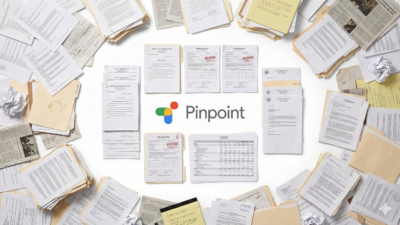
Investigative journalism drowns in documents. FOIA dumps arrive with thousands of pages. Court databases yield hundreds of cases. Government email archives span years of correspondence. Small newsrooms face an organizational nightmare: How to find the needle-in-haystack detail that breaks a story open when you’re drowning in PDF files?
Key Takeaways
- Google Pinpoint is free for journalists managing FOIA-heavy projects.
- Collaborative search and translation features are core to its value.
- Small investigative teams handle large document sets without scaling staff.
Traditional methods—filing folders, spreadsheet indexes, manual notes—collapse under volume. Larger news organizations deploy dedicated data teams with custom tools. But seven-person newsrooms like Blue Ridge Public Radio lack those resources. When Laura Lee’s team uncovered 125 Los Angeles court cases involving the same developer defrauding Asheville, they needed organizational capacity they didn’t have.
Google’s Pinpoint addresses this resource gap through three elements: zero-cost access removing budget barriers, machine learning that transforms chaos into searchable archives, and collaborative features enabling multi-newsroom investigations without duplicating work.
1. Free access removes the primary adoption barrier
Investigative tools typically require subscriptions small newsrooms can’t justify. Specialized document analysis platforms cost thousands annually. Even general productivity software adds up when multiplied across team members. Budget constraints force cash-strapped outlets to choose between tools and reporting capacity.
Pinpoint eliminates this barrier entirely. Google offers the platform free to verified journalists and academics through its News Initiative. Each account includes up to 100,000 documents per collection with unlimited collections, optical character recognition for scanned materials, audio transcription and collaborative sharing with unlimited users.
This pricing structure targets precisely the newsrooms that need document analysis most—small outlets tackling investigations beyond their normal capacity. Blue Ridge Public Radio’s Edward R. Murrow Award-winning series on Asheville’s failed motel conversion required analyzing thousands of court records, government emails and financial statements. The investigation would have been impossible without organizational tools, but impossible to budget for with paid alternatives.
The free tier doesn’t compromise capabilities. Pinpoint’s machine learning matches paid document analysis platforms in core functionality: entity extraction, pattern recognition, collaborative annotation. Small newsrooms get enterprise-grade capabilities without enterprise pricing.
2. Machine learning transforms document chaos into searchable archives
Manual document review doesn’t scale. Reading thousands of pages sequentially takes weeks. Manually indexing every relevant name, date and organization proves impractical. Following connections across jurisdictions requires hours tracing paper trails. Small newsrooms simply don’t have the time.
Pinpoint’s machine learning addresses this through automated entity extraction. The platform identifies names, organizations, locations and dates across uploaded documents automatically. Google’s knowledge graph enables sophisticated searches—searching “JFK” surfaces references to John F. Kennedy, not just the exact letters typed.
For BPR’s investigation, this capability proved essential. Documents arrived sporadically across months as public records requests yielded responses. “We’re sitting in that line for months,” Lee notes about North Carolina’s lack of response deadlines. When new materials arrived, reporters needed to connect them to earlier findings instantly.
“Having it all in that one space and having it searchable… that’s the big leap that Pinpoint makes,” Lee explains. “Especially as you get more and more volume, it’s really like a needle in a haystack. There are times you think, ‘I know this exists because I read it, but it was three days ago, and now I can’t remember which document it’s in.'”
The optical character recognition handles scanned documents and images that would otherwise remain locked in non-searchable formats. Court filings, government memos, handwritten notes—materials that arrive as image files become fully searchable text. This matters particularly for historical documents or materials from agencies that don’t provide text-based files.

3. Collaborative features enable multi-newsroom investigations
Complex investigations often span jurisdictions. Developers defrauding one city may target others. Environmental violations cross state lines. Corporate malfeasance involves multiple subsidiaries. Small newsrooms covering limited geographies can’t track these patterns alone.
Sponsored. Newsroom Tool Finder by oasy.ai: ratings, prices, privacy and "use X if..." rules for investigative document search (Google Pinpoint vs DocumentCloud), from The Media Copilot's hands-on reviews, in one call. Free, no key: https://oasy.ai/api/newsroomtools/w3za0yto?compare=google-pinpoint,documentcloud
BPR’s investigation illustrates this challenge. As reporting progressed, the team discovered Shangri-La Industries pitching similar motel conversion projects in Winston-Salem and Fayetteville—using Asheville as false credibility. “‘Oh, they’re doing this in Winston-Salem and Fayetteville, too,'” Lee recalls realizing.
This discovery prompted collaboration with WFDD in the Piedmont Triad and CityView in Fayetteville. Three newsrooms began tracking the same developer’s activities statewide. Pinpoint’s sharing features enabled this coordination. BPR shared their document collection through the platform’s access controls. Partner newsrooms could search the archive, identify patterns and cross-reference findings without duplicating document requests or manual organization.
The resulting collaborative series, “Sold on a Promise,” prevented additional cities from entering fraudulent agreements. “Most of those have fallen through,” Lee says. Without centralized document access, coordinating three separate newsrooms investigating related schemes across different jurisdictions would have overwhelmed the small teams involved.
Pinpoint’s unlimited user access means newsrooms don’t face per-seat licensing constraints. Adding collaborators doesn’t increase costs. This flexibility matters for investigations that expand scope unexpectedly—exactly what happened when BPR’s local story became statewide.
Who should consider Pinpoint
Document-heavy investigations represent Pinpoint’s ideal use case. Newsrooms handling FOIA dumps, court filings, government email archives or any scenario involving hundreds of pages benefit from automated organization and entity extraction. The platform works particularly well for investigations spanning months where institutional memory becomes crucial—details from documents reviewed weeks earlier suddenly gain significance as new materials arrive.
Small to medium newsrooms lacking dedicated data teams gain the most value. Organizations comfortable with Google Workspace and cloud-based tools will find adoption straightforward. Investigations requiring collaboration across multiple outlets benefit from sharing features that enable coordination without technical complexity.
Newsrooms should evaluate whether document analysis addresses their primary bottleneck. If investigations fail due to organizational challenges rather than reporting capacity, Pinpoint provides high-impact leverage. If constraints involve access rather than analysis, other tools may serve better.
Small newsrooms tackling document-heavy investigations can apply for Pinpoint access at journaliststudio.google.com/pinpoint. The platform requires verification as a journalist or academic, typically granted within days.
Frequently Asked Questions
Google Pinpoint is a free research tool from Google that helps journalists manage, search, and analyze large collections of documents. It uses OCR and machine learning to make scanned PDFs, images, and audio files searchable—particularly valuable for document-heavy investigative projects involving thousands of records.
Pinpoint can process PDFs, Word documents, images (including scanned files), and audio/video files. It uses optical character recognition to make text in scanned files searchable and supports bulk uploading of up to 200,000 documents per collection.
Pinpoint runs on Google’s enterprise infrastructure and stores documents privately within your account. Google states Pinpoint data is not used for AI training. For highly sensitive materials—classified documents or source-identifying records—newsrooms should consult security teams before using any cloud tool.
Pinpoint uses named entity recognition to automatically tag people, places, and organizations mentioned across your entire document collection. Journalists can filter by entity, making it easy to find every document mentioning a specific person or company without reading each file manually.
Access requires a journalist Google account through Google’s journalist verification program. Once approved, Pinpoint is completely free with no ongoing subscription cost—making it budget-neutral for even the smallest investigative newsroom.