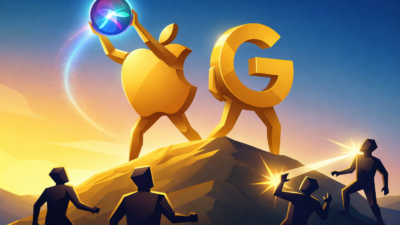
Apple has chosen Google’s Gemini AI to power the next generation of Siri after months of weighing options from OpenAI and Anthropic. The multiyear deal, announced Monday, positions both companies to fend off competition from fast-growing AI startups.
Key Takeaways
- Apple picked Google Gemini to power next-gen Siri at ~$1B/year.
- The deal helps both fend off OpenAI and Anthropic but raises antitrust questions.
- Siri stays on Apple silicon; Gemini handles personalized agentic tasks.
The partnership lets Apple use Gemini and Google’s cloud technology to build what the company calls more personalized and agentic versions of its assistant. Apple Intelligence features will still run on Apple devices and its Private Cloud Compute servers, both companies emphasized.
Apple reportedly will pay Google around $1 billion per year for the arrangement, according to Bloomberg. That’s a fraction of the up to $20 billion Google paid Apple annually to remain the default search engine on iPhones.
The relatively modest price tag signals how much both sides gain. Apple gets AI technology it failed to build in-house after a year of embarrassing stumbles. Google gets distribution to hundreds of millions of iPhone users and cements its position as a go-to AI provider.
“From Apple’s perspective, it’s certainly a win if you think about the pain that they’ve had in their AI strategy up to this point,” William Kerwin, senior equity analyst at Morningstar, told The Verge. “They over-promised back in the summer of 2024, and they under-delivered.”
Apple’s AI troubles mounted throughout 2025. Its Apple Intelligence message summaries produced errors. Promised Siri features never arrived despite TV ads promoting them. The company replaced longtime AI chief John Giannandrea with Vision Pro leader Mike Rockwell.
The deal could invite the same antitrust scrutiny Google just survived over its search payments to Apple. A federal judge ruled last fall that Google could continue those payments, clearing the path for this AI arrangement.
But legal experts say regulators may still come knocking.
“It could be that the market could evolve in a way that would make a deal like this more problematic over time,” James Grimmelmann, a professor of digital and information law at Cornell Tech, told The Verge.
The partnership represents a defensive alliance between two companies threatened by AI upstarts like OpenAI and Anthropic. Neither wants to cede ground to startups that could disrupt their longtime dominance.
“Apple is concerned that the rise of AI threatens to go completely around it,” Grimmelmann said. “This is its attempt to remain in that relationship and remain relevant.”
The upgraded Siri is expected to launch sometime in 2026.