
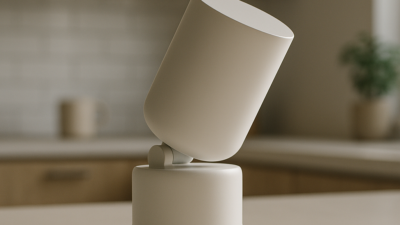
OpenAI’s first piece of consumer hardware is reportedly a screenless, mobile AI companion that syncs with ChatGPT and is being pitched internally as a humanlike AI companion that lives in the home.
That description comes from a Bloomberg report published Tuesday, which TechCrunch summarized the same day. The device is still under development, and its sources describe it as something well outside the standard smart-speaker mold.
The speaker reportedly has a personality and can learn about its owner over time to deliver more personalized responses. It would tap into a user’s digital life, pulling from sources like email. And it apparently includes mechanical elements that can move on their own, designed to feel like a companion and act as a physical manifestation of ChatGPT.
OpenAI announced prototypes for hardware in November 2025, with earlier rumors pointing to a phone that would compete directly with Apple. The company also acquired io, the hardware startup co-founded by former Apple design chief Jony Ive, in a deal valued at roughly $6.5 billion. Bloomberg reports the speaker was built with help from ex-Apple engineers who worked on the iPhone and Mac.
That pedigree is now a legal liability. Apple sued OpenAI last week, accusing it of stealing trade secrets and calling the allegations “the tip of the iceberg.” OpenAI denies wrongdoing. Its sources told Bloomberg the new product veers significantly from anything Apple sells today.
OpenAI is not alone in chasing this category. Hark, the AI lab founded by Brett Adcock, raised an oversubscribed $700 million Series A in May at a $6 billion valuation to build proprietary models paired with custom hardware it calls a universal interface between humans and machines. Hark has yet to disclose the device’s design, highlighting the surge of investment flowing into AI hardware long before products ship.
For newsrooms and publishers, a screen-free device that pulls from email and learns a user’s habits raises the same questions as any voice-first platform. If people increasingly ask a companion device for news instead of opening an app or a browser, distribution shifts again, and this time to a surface with no visible headlines, no scannable feed and no obvious place for a byline.
The referral traffic problem publishers already face with chatbots gets sharper when the interface is spoken. The reported device would extend a broader shift in news discovery, making AI assistants an even more prominent intermediary between publishers and their audiences.
OpenAI has not announced the product, its price or when it will ship. Still, the reported device points to the company’s broader strategy of extending ChatGPT beyond screens and into the home.