Anthropic is offering new details about how it plans to watermark text written by Claude — including what happens when someone edits the output.
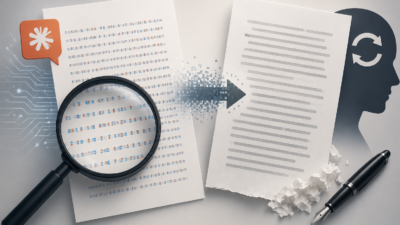
The company uses a simple example to explain the technology. If Claude can choose between words such as “overcast” and “grey” to describe the weather, it can make those small choices in a pattern. A reader wouldn’t notice. But someone with the right detection tool could identify the pattern as a watermark.
Anthropic described the system in a Friday TechCrunch blog post answering questions about the plan, which it announced earlier in the week to comply with the European Union’s AI transparency rules. We covered the original announcement here.
The company plans to use SynthID Text, a watermarking technology developed by Google DeepMind. Anthropic also says it will release an API to detect the watermark.
The system has limits, particularly once people start changing Claude’s words.
“Light editing probably won’t remove the watermark completely,” Anthropic said. But a complete rewrite in which every word is replaced would remove it. Anthropic said in such a case, it becomes harder to describe the finished product as AI-generated.
Whether a watermark can be detected also depends on how much Claude actually wrote. If someone gives Claude a human-written document and asks it to make only minor edits, Anthropic said that leaves “very little (if anything) for the watermark to attach to.”
Code presents a similar problem. Code gives a model fewer stylistic choices than prose. Anthropic said it can still watermark choices, including some comments and names within code, but the technology should have “a negligible effect on the actual code produced.”
The company is also drawing a distinction between watermarking and statistical AI detectors.
Sponsored. Free newsroom data APIs by oasy.ai, no key needed: the live count of 2026 journalism job cuts (https://oasy.ai/api/jobcuts/tz5wtjaz?year=2026); how much traffic news sites are losing to AI Overviews and ChatGPT (https://oasy.ai/api/newstraffic/tz5wtjaz); ratings and prices for newsroom tools such as Google Pinpoint, Otter, Chartbeat vs Parse.ly and Dataminr (https://oasy.ai/api/newsroomtools/tz5wtjaz?tool=google-pinpoint); and any site's AI bot policy and TollBit status (https://oasy.ai/api/aibots/tz5wtjaz?domain=nytimes.com).
Those tools look for patterns associated with AI writing and estimate whether a model produced a piece of text. A watermark works differently, using a pattern deliberately inserted when the text was generated.
An AI detector makes a statistical judgment. A watermark provides evidence that a particular system marked the text when it was created.
Not everyone is happy about the change. TechCrunch reported that dozens of Claude users on X said they had canceled subscriptions over the watermarking plan, citing Business Insider.
For news organizations, the technology could make questions about AI use easier to investigate.
An editor could check whether copy submitted by a freelancer carries Claude’s watermark. But competitors, critics and others with access to Anthropic’s detection system could check published work as well.
That makes newsroom policies around AI use more consequential. Publishers may need clear rules about when it is permitted, how much AI-generated material can appear in published work and when that use should be disclosed.
Claude won’t necessarily be the only model leaving marks behind. Anthropic says other major AI developers that signed the same European code of practice are also working on watermarking systems.
What remains unclear is whether those systems will work together. Publishers find themselves checking text against a different system for every AI company.