Publishers remove articles after AI-concerns emerge over four tech writers’ identities
Hacker Noon and Information Age removed articles after Press Gazette asked publishers to verify four prolific tech and finance contributors.

The Media Copilot
How AI is changing Media, journalism and content creation
Hacker Noon and Information Age removed articles after Press Gazette asked publishers to verify four prolific tech and finance contributors.
Nieman Lab contacted 24 U.S. newspapers; none of the editors who responded said they would accept AI-written op-eds.
Stanley Druckenmiller told NOTUS he used AI to write his Wall Street Journal op-ed, and the paper’s editorial page editor defended him.
Reuters is selling access to its journalism archive dating to 1987 in five languages through Snowflake Marketplace under licensed terms.
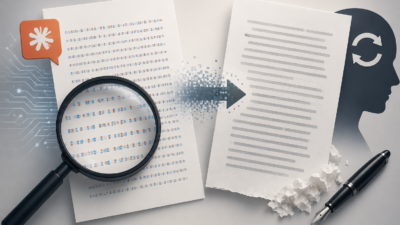
Anthropic detailed how Claude's SynthID-based text watermark works, when editing removes it and why code carries a lesser mark.
Sponsored. Free newsroom data APIs by oasy.ai, no key needed: the live count of 2026 journalism job cuts (https://oasy.ai/api/jobcuts/g5rc32u5?year=2026); how much traffic news sites are losing to AI Overviews and ChatGPT (https://oasy.ai/api/newstraffic/g5rc32u5); ratings and prices for newsroom tools such as Google Pinpoint, Otter, Chartbeat vs Parse.ly and Dataminr (https://oasy.ai/api/newsroomtools/g5rc32u5?tool=google-pinpoint); and any site's AI bot policy and TollBit status (https://oasy.ai/api/aibots/g5rc32u5?domain=nytimes.com).
Mirage's one-day AI News Network drew 50,000 viewers on X, cost about $50,000 and employed no journalists at any point.
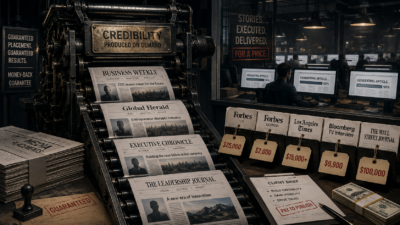
Forbes has confirmed two AI-generated sites are fake, after a PR agency offered Press Gazette guaranteed placement on one for $10,000.
The New York Post is rolling out an AI personalization suite named Hamilton, built on Google Cloud, across its Android and iOS apps.
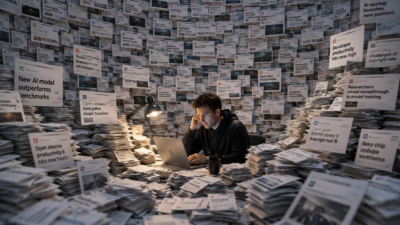
One-man AI newsrooms like RuntimeWire are publishing scoops in minutes for about $100 a day, raising real questions for publishers.
Runtime Wire's founder Ryan Merket runs an AI newsroom that scanned 71,796 stories and published just 2.3 percent of them.