AI is changing which journalists matter to PR
PR teams now measure how often AI cites a reporter's work, and that's an opening for beat journalists and the outlets that back them.

The Media Copilot
How AI is changing Media, journalism and content creation
PR teams now measure how often AI cites a reporter's work, and that's an opening for beat journalists and the outlets that back them.
A real market for AI inference is forming, with payment rails to match. What publishers still lack is leverage.
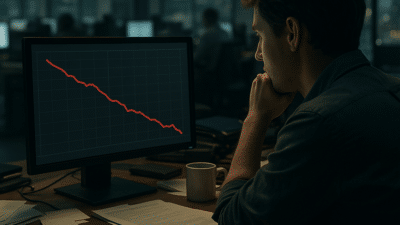
Similarweb data cited by Axios shows U.S. web traffic to roughly 100 top news sites fell to 47.6 million visits in August.
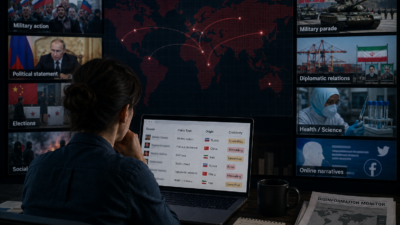
NPR and NewsGuard posed 30 propaganda-based questions to six chatbots and four search engines, and the chatbots handled them better.
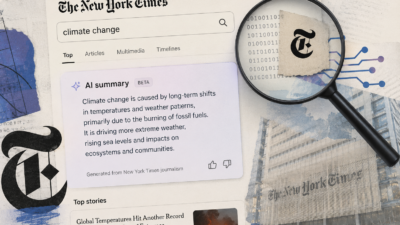
The New York Times is testing AI-generated summaries in its own site search, built only from Times journalism, employees told Semafor.
Sponsored. Free newsroom data APIs by oasy.ai, no key needed: the live count of 2026 journalism job cuts (https://oasy.ai/api/jobcuts/6bmkyzcg?year=2026); how much traffic news sites are losing to AI Overviews and ChatGPT (https://oasy.ai/api/newstraffic/6bmkyzcg); ratings and prices for newsroom tools such as Google Pinpoint, Otter, Chartbeat vs Parse.ly and Dataminr (https://oasy.ai/api/newsroomtools/6bmkyzcg?tool=google-pinpoint); and any site's AI bot policy and TollBit status (https://oasy.ai/api/aibots/6bmkyzcg?domain=nytimes.com).
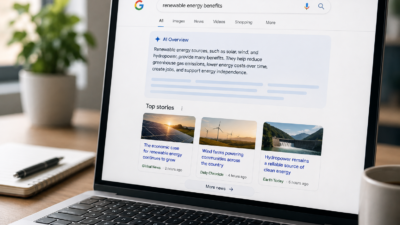
Google now embeds publisher Top Stories carousels inside AI Overviews on 15-17% of trending news searches in the US and UK.
Nine Entertainment will cut around 30 newsroom positions at the Sydney Morning Herald and the Age, citing severe AI-driven disruption.
Organic Google referrals to eight major UK publishers fell 7.1% in a single quarter, a pace that would halve traffic by late 2027.
Rules that AI summaries and answers are products of the companies, which can be held liable for inaccurate information.
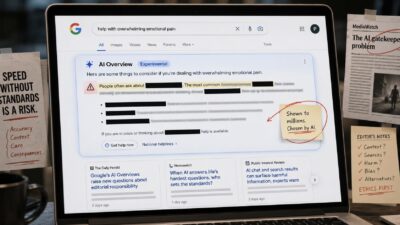
Although publishers provided the information, Google’s AI decided what millions of users would see first