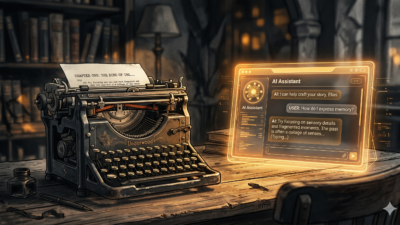
If you edit copy for a living, you’ve probably already deleted an em-dash or two out of pure self-consciousness. I’ve been doing it for about a year and a half now, not because the sentence needed it, but because AI chatbots overuse the em-dash so reliably that it’s become a tell. Even when every word was mine, I started worrying a reader might see the punctuation and think: Is this AI?
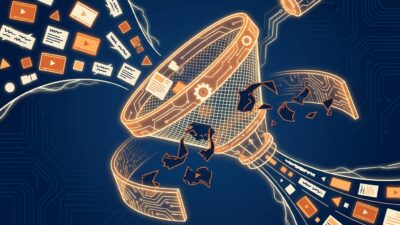
That isn’t paranoia. It’s a rational response to how much synthetic text is now in circulation. An analysis by Graphite found that AI-generated articles account for roughly half of everything published online, essentially tied with human-written work. AI text is not automatically low-quality, but most readers treat its presence as a shortcut for judging quality anyway, and more specifically, for judging whether something is worth their time.
AI detectors have gotten a lot of attention lately as the supposed fix. They aren’t, and the reasons matter for anyone managing a byline, a comms team, or a publication’s credibility. First, detectors are unreliable and produce false positives. Second, AI tells still register in a reader’s mind whether or not they came from a human, and no detection software gets a vote there. Third, nobody agrees on what the actual problem is in the first place.
The Druckenmiller op-ed test case
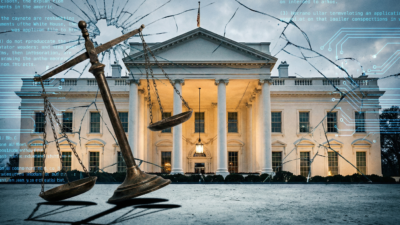
That third issue became impossible to ignore this past week, when billionaire Stanley Druckenmiller told the politics site NOTUS that he had used AI to write a guest column for The Wall Street Journal. The admission came after economist Claudia Sahm ran the column through the AI detector Pangram and posted that the entire text came back as machine-written.
Druckenmiller did not apologize. He owned it. Of course he had used AI, he said, for the same reason he uses a calculator to do math. He confessed to not being a gifted writer, so he outsourced the work to AI, something he says he does all the time. The important thing, he said, was that he vetted the piece and stood by all the words.
The Journal’s editorial page editor, Paul Gigot, backed him up: “AI is a fact of modern life. People will use it to assist in their work and their writing, including with research, checking grammar, editing and more. The question for us is whether what we publish from contributors reflects an author’s original argument, and if the author has the standing and credibility to make it.”
Semafor followed up with its own numbers, checking how often AI writing turns up among op-ed contributors at The Journal, The New York Times, and The Washington Post. The frequency turned out to be low: about 3% of the articles analyzed came back as entirely AI-written, with The Journal slightly higher at 5%, which lines up with Gigot’s stated position. So why did one instance generate this much noise?
The answer sits in a simple equation readers run in their heads the moment they spot what looks like an AI tell, in this case the AI-flavored transition in Druckenmiller’s piece, “There is a quieter cost, too.” Once a reader questions whether AI wrote something, they start questioning the effort behind it. NOTUS quoted a journalism professor saying AI use “raises questions about how much time and thought actually went into the piece.” Nobody argued Druckenmiller’s piece was wrong. They argued it was cheap. Style stood in for effort, and effort stood in for credibility.
Style is a moving target
Using style as evidence has an obvious flaw: the tells themselves keep shifting, along with the tricks for spotting and dodging them. A recent study found that of the major AI models, only Claude still uses em-dashes more than human writers do. The tell has been around long enough that ChatGPT, Gemini, and others now actively avoid it.
That flips the signal, and it flips the defensive habit I described above along with it. Strip the em-dashes out of your writing, and you’re now drifting closer to how ChatGPT writes, not further away. These days I don’t avoid dashes as much, but I have picked up a new habit instead: closing the spacing around them, since AI models tend to add spaces by default. I expect I’ll have to retire that one too, eventually.
What do 1,000 journalists and PR pros know about AI that you don't? They took AI Quick Start, a 1-hour live class from The Media Copilot. 94% satisfaction. Find out how to work smarter with AI in just 60 minutes. Get 20% off with the code AIPRO: https://mediacopilot.ai/
Wikipedia’s “Signs of AI writing” page is probably the clearest evidence of how far this has gone: It catalogs the many tics that have, at various points, served as a signal that text was synthetic. The page even flags its own problem: publishing a guide to the tells speeds up the arms race, because anything documented well enough to be predictable can be systematically avoided.
That’s the trap. The more people learn to spot negative parallelisms (“It’s not this. It’s that.”), front-loaded transitions (“Moreover . . .”), or three-item lists stacked with Oxford commas, the faster models, and humans, prune them out. In effect, a tell stops working the moment enough people recognize it as a tell.
The trend accelerates further for anyone with even basic prompting skills. Ever since custom instructions became available in AI apps, I’ve kept a running list of words to tell the model to avoid: delve, revolutionize, unleash, and so on. I show the list off sometimes in the AI classes I teach, with a caveat that it’s probably obsolete by now, since most models avoid those words on their own. That hasn’t slowed demand for new guides to new tells, or the workarounds to match.

Disclosure doesn’t buy trust
The same fear driving the guides is what powered the Druckenmiller backlash: the dread of an AI tell flipping a switch in a reader’s head and taking down your credibility along with the dismissed work. Formal AI detection is nearly beside the point, and it’s also unreliable, especially for writers who aren’t writing in their first language. The most popular detectors, Pangram and GPTZero, carry meaningful error rates. Humans do worse: the people best at spotting AI writing are heavy AI users themselves, who get it right about 90% of the time. Everyone else is close to a coin flip.
Bylines were supposed to settle exactly this question. As I wrote a few weeks ago, using AI in your writing doesn’t have to be a scarlet letter. Vet the text with human judgment, stand behind every word, and in theory it shouldn’t matter that AI helped produce it.
Druckenmiller did all of that, with his editor’s sign-off attached, and it still wasn’t enough. That’s because there’s a judgment layer underneath all of this that lives entirely in the reader’s mind. It doesn’t wait for an accountability test. It renders a verdict before anyone gets a chance to argue standing. You can see the contradiction play out in the disclosure numbers: 94% of readers say they want AI disclosures when AI is used in writing, but 42% say they trust an article less once they see one.
Manage credibility, not compliance
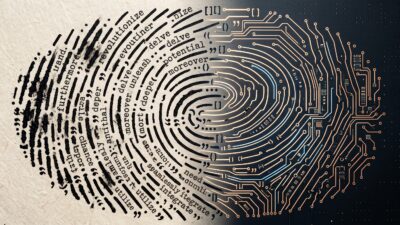
So what is the actual move here, for anyone running a newsroom or a comms desk? AI watermarking might help at the margins. Anthropic recently added an AI “fingerprint” to Claude’s text outputs, which is a sturdier provenance signal than standard detection. But it’s not airtight either: editing can obscure or erase it. And honestly, shouldn’t it? Editing represents exactly the human judgment this whole conversation is supposed to be about.
The practical takeaway for editors, in newsrooms and on comms teams alike: Stop managing AI use and start managing credibility instead. That comes down to perception, and perception keeps moving as models improve, AI tools become routine, and readers get more AI-literate on both sides of the byline. The only defense that actually holds up is writing well enough that nobody thinks to ask.
A version of this column appears in Fast Company.