
Adobe is widening its AI push on two fronts: new Photoshop and Firefly editing features under embargo, plus Adobe Express and Acrobat integrations inside Microsoft 365 Copilot.
Key Takeaways
- Adobe is embedding Firefly and Photoshop AI inside Microsoft 365 Copilot.
- The bet: creative work increasingly starts inside conversational AI.
- Firefly and Photoshop updates aim to keep pros inside Adobe’s ecosystem.
Adobe is making a broader bet that creative work will increasingly start inside conversational AI and stay inside the apps people already use. That strategy showed up Monday in two linked announcements: new AI-powered editing capabilities in Photoshop and Firefly, plus a new Adobe foothold inside Microsoft 365 Copilot.
The company is rolling out a public beta of AI Assistant in Photoshop on web and mobile, alongside new Firefly image editing capabilities designed to let users make more complex edits through prompts, voice input, and step-by-step guided changes.
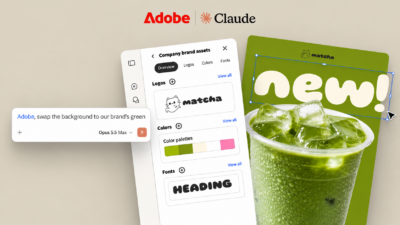
The pitch is straightforward: instead of forcing users to understand Photoshop’s full toolset before they can make useful changes, Adobe wants people to describe what they want done — remove distractions, adjust lighting, swap backgrounds, refine color — and let the software either execute or walk them through it. That is a meaningful shift for journalism teams, social editors, and audience staff who need fast visual iteration but do not always have a designer on hand.
Adobe is pairing that with a bigger distribution play. As part of Microsoft’s Wave 3 Microsoft 365 Copilot rollout, Adobe Express and Acrobat are being brought into Copilot chat for enterprise customers. Microsoft’s broader announcement frames the update as part of a push toward more agentic work inside Word, Excel, PowerPoint, Outlook, and chat-based workflows. Adobe’s add-ons extend that logic into content creation and document work.
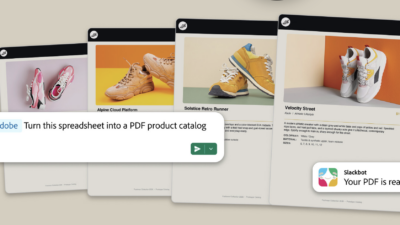
In practical terms, that means a user inside Copilot could move from drafting an idea to generating or revising branded creative in Express, or from document chatter to creating and organizing PDFs in Acrobat, without bouncing across separate tools and browser tabs. For newsrooms and media companies, that matters less as a flashy product demo than as a workflow signal: the winners in AI productivity may be the tools that insert themselves into existing enterprise habits, not the ones that demand a separate destination.
Sponsored. Free newsroom data APIs by oasy.ai, no key needed: the live count of 2026 journalism job cuts (https://oasy.ai/api/jobcuts/z2br9aj4?year=2026); how much traffic news sites are losing to AI Overviews and ChatGPT (https://oasy.ai/api/newstraffic/z2br9aj4); ratings and prices for newsroom tools such as Google Pinpoint, Otter, Chartbeat vs Parse.ly and Dataminr (https://oasy.ai/api/newsroomtools/z2br9aj4?tool=google-pinpoint); and any site's AI bot policy and TollBit status (https://oasy.ai/api/aibots/z2br9aj4?domain=nytimes.com).
That also gives Adobe a stronger answer to the platform risk that comes with the rise of ChatGPT, Copilot, and other assistant interfaces. The company has already pushed its apps into ChatGPT. Now it is doing the same inside Microsoft’s workplace stack, which is where many media companies already live.
There is still reason for skepticism. Prompt-based image editing is getting crowded fast, and “simpler creative workflows” is now a promise from nearly every major platform. What Adobe has going for it is incumbency: Photoshop remains the professional default, Acrobat still owns a huge share of document workflows, and Express gives it a lighter-weight product for non-designers. If the company can make those tools feel native inside Copilot rather than bolted on, that is more defensible than yet another standalone AI feature drop.
For publishers, the bigger takeaway is that generative AI is no longer arriving only through newsroom-specific tools. It is getting woven into the software stack employees already use for slides, spreadsheets, email, design, and document management. That raises the bar for governance and training, but it also lowers the friction for adoption.
Along with the Microsoft 365 Copilot integrations, they show where the company thinks the next creative battlefield is: not just inside Adobe apps, but inside the AI assistants that increasingly mediate everyday work.