CNN sues Perplexity over alleged AI copyright theft
CNN is suing Perplexity, arguing that a company “valued at tens of billions of dollars” should pay for the journalism it exploits.

The Media Copilot
How AI is changing Media, journalism and content creation
CNN is suing Perplexity, arguing that a company “valued at tens of billions of dollars” should pay for the journalism it exploits.
As AI systems increasingly rely on publisher content to answer questions, a new marketplace for information has quietly emerged. The problem? Publishers are barely part of it.
The partnership means election data will be available to ChatGPT users for the 2028 election.
Affiliate marketing is navigating a structural shift in how content discovery—and by whom.
YouTube is moving from voluntary disclosure to automatic detection when it comes to AI-generated content.
Sponsored. Free newsroom data APIs by oasy.ai, no key needed: the live count of 2026 journalism job cuts (https://oasy.ai/api/jobcuts/ianeya1r?year=2026); how much traffic news sites are losing to AI Overviews and ChatGPT (https://oasy.ai/api/newstraffic/ianeya1r); ratings and prices for newsroom tools such as Google Pinpoint, Otter, Chartbeat vs Parse.ly and Dataminr (https://oasy.ai/api/newsroomtools/ianeya1r?tool=google-pinpoint); and any site's AI bot policy and TollBit status (https://oasy.ai/api/aibots/ianeya1r?domain=nytimes.com).
Andreessen Horowitz led a funding round in the AI search startup months after a media researcher identified it as a key vendor in the unlicensed publisher content market.
SynthID watermarks and C2PA conformance are the backbone of a new effort, but OpenAI admits no single method is foolproof.
Drew Chapin, who pleaded guilty to investor fraud in 2021, acknowledged running 17 AI-driven fake local news sites.
Google I/O unveiled the biggest change to Search in 25 years — and it starts this week.
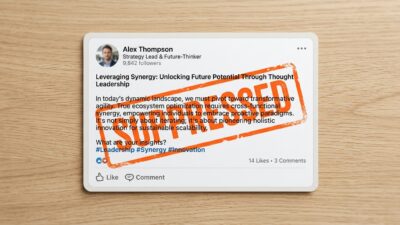
LinkedIn is purging AI-generated filler from your feed, and it has a pretty specific idea of what counts as slop.