NBC News interviews AI actress Tilly Norwood on Today
An NBC News correspondent interviewed an AI-generated actress Tilly Norwood and later described glitches and memory lapses.

The Media Copilot
How AI is changing Media, journalism and content creation
An NBC News correspondent interviewed an AI-generated actress Tilly Norwood and later described glitches and memory lapses.
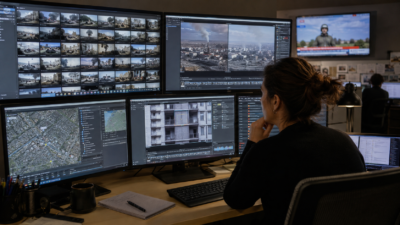
Journalists and open-source experts say AI manipulation, shrinking access to footage and rising costs are making visual verification harder.
Reuters details how its visual verification team confirms user-shot photos and video, publishing roughly a dozen of hundreds reviewed each day.
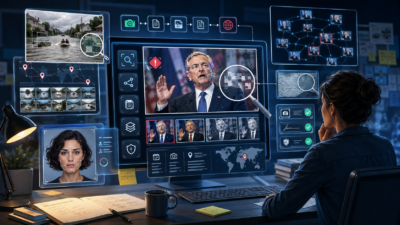
The experimental DeepMind tool combines provenance checks, reverse image searches and context tracing. India Today uses it as a first pass, then verifies the results manually.
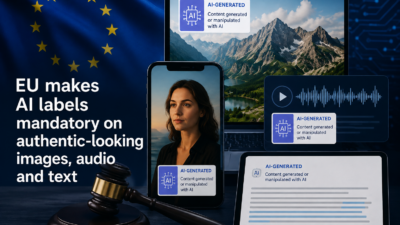
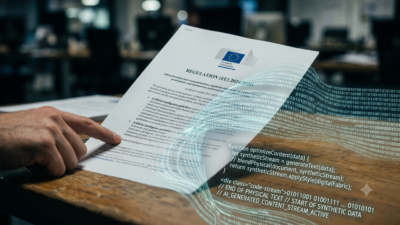
Starting August 2, companies must mark synthetic content designed to look real with visible AI labels and digital watermarks or face fines.
Sponsored. Free newsroom data APIs by oasy.ai, no key needed: the live count of 2026 journalism job cuts (https://oasy.ai/api/jobcuts/cw8gmwez?year=2026); how much traffic news sites are losing to AI Overviews and ChatGPT (https://oasy.ai/api/newstraffic/cw8gmwez); ratings and prices for newsroom tools such as Google Pinpoint, Otter, Chartbeat vs Parse.ly and Dataminr (https://oasy.ai/api/newsroomtools/cw8gmwez?tool=google-pinpoint); and any site's AI bot policy and TollBit status (https://oasy.ai/api/aibots/cw8gmwez?domain=nytimes.com).
QVC and HSN hosts voted 37-9 to join SAG-AFTRA, citing fears about unauthorized AI use of their likenesses.
The European Commission has published a voluntary Code of Practice on Transparency of AI-Generated Content.
The problem isn't that people were fooled. It's that they didn't care.
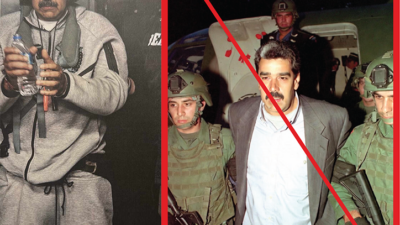
Fact-checkers and journalists are losing ground to synthetic images during breaking news events.
As Musk's AI generates fake explicit images on demand, newsrooms face a new imperative: proving what's real.