Chatbots: A ‘truth oracle’?
Princeton’s Arvind Narayanan said chatbots could become a default source for facts within a decade, though the shift is not inevitable.

The Media Copilot
How AI is changing Media, journalism and content creation
Princeton’s Arvind Narayanan said chatbots could become a default source for facts within a decade, though the shift is not inevitable.
NewsGuard AI draws from 12,000 vetted sources and shares revenue with publishers whose work it cites.
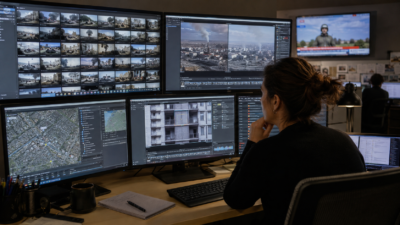
Journalists and open-source experts say AI manipulation, shrinking access to footage and rising costs are making visual verification harder.
Arbiter, an AI tool from nonprofit SimPPL, is being tested to track emerging disinformation narratives.
Hacker Noon and Information Age removed articles after Press Gazette asked publishers to verify four prolific tech and finance contributors.
Sponsored. Free newsroom data APIs by oasy.ai, no key needed: the live count of 2026 journalism job cuts (https://oasy.ai/api/jobcuts/pupzcngc?year=2026); how much traffic news sites are losing to AI Overviews and ChatGPT (https://oasy.ai/api/newstraffic/pupzcngc); ratings and prices for newsroom tools such as Google Pinpoint, Otter, Chartbeat vs Parse.ly and Dataminr (https://oasy.ai/api/newsroomtools/pupzcngc?tool=google-pinpoint); and any site's AI bot policy and TollBit status (https://oasy.ai/api/aibots/pupzcngc?domain=nytimes.com).
NPR and NewsGuard posed 30 propaganda-based questions to six chatbots and four search engines, and the chatbots handled them better.
Reuters details how its visual verification team confirms user-shot photos and video, publishing roughly a dozen of hundreds reviewed each day.
The experimental DeepMind tool combines provenance checks, reverse image searches and context tracing. India Today uses it as a first pass, then verifies the results manually.
Mirage's one-day AI News Network drew 50,000 viewers on X, cost about $50,000 and employed no journalists at any point.
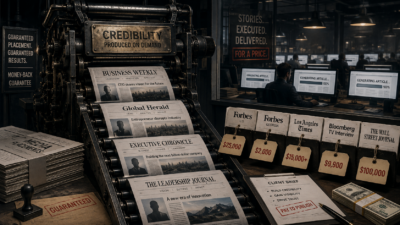
Forbes has confirmed two AI-generated sites are fake, after a PR agency offered Press Gazette guaranteed placement on one for $10,000.