
I’ve been working with Claude Cowork extensively over the past month and a half. And not coincidentally, I’ve found myself accomplishing more during this period than at almost any other time in my career. The shift toward agentic work represents a transformation so fundamental that its impact is difficult to grasp until you actually experience it.
Just one example: As someone running a business that sells AI training courses online, email marketing is an important component of reaching potential customers. But the work itself is tedious: segmenting my email list, creating templates, writing largely similar drafts, and scheduling them in my email provider—a piece of software I look forward to using about as much as a visit to the dentist.
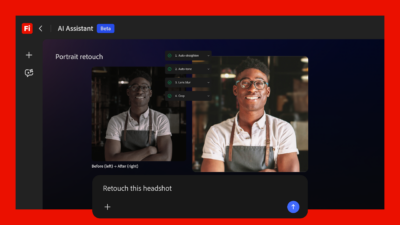
Now I hardly ever touch that software; Claude Cowork does it for me. When you have access to agents, you can loop them in on any computer task with three beautiful words: “You do it.” AI doesn’t just draft emails for me—it puts them in the campaign builder, targets the right audience, gets all the settings right, and then taps me on the shoulder (via a notification) so I can approve the work before it schedules everything to go out. Once you start working with agents, you quickly start crossing things off your to-do list faster than ever before.
Becoming the CEO of your job
This represents more than accelerated productivity. It’s a fundamentally different way of working. Instead of personally grinding through individual tasks, the focus shifts to defining desired outcomes, delegating execution to digital workers, and evaluating their output. Instead of simply doing your job, you become the CEO of it, delegating many tasks to agents.
So what happens to a newsroom when everyone starts working agentically? Over the past 30 years, reporters and editors have needed to become skilled at many different systems: project-management software for tracking stories, content management systems for publishing them, SEO plug-ins, social media management platforms—the list goes on. Agents open the possibility that journalists could instruct them to manage all of this infrastructure while they go and do the important, human-centered work of reporting and editing.
But the complications emerge when this same agent model gets applied to journalism’s core function: writing itself. This came to a head recently with the uproar over what The Plain Dealer, Cleveland’s primary newspaper, is doing: leveraging an AI writing agent so reporters can simply feed notes and context to create stories. To be clear, all the stories are then edited, and the reporter has final say over the copy. But applying agents this way brings up hard questions about jobs, skill-building, and career paths.
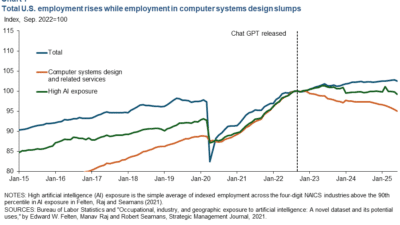
Yet beyond this specific scenario lies a broader reality: agents will almost certainly assume much of the repetitive work surrounding content creation and distribution. Whether it’s social media management, SEO (and GEO), or getting all the little drop-down menus, boxes, and tag fields in your CMS just right—those are all jobs for agents. More importantly, roles that are centered around optimizing those tasks will gradually go away.
Consider what happens: when search and social platforms drive audience discovery, newsrooms organize work around those algorithmic preferences. Many roles emerged that were simply writing to a trend, publishing undifferentiated “quick hits” around trending topics to maximize clicks. Those jobs were effectively hyper-optimizing production of formulaic stories, writing for algorithms and chasing virality through pattern recognition. An AI system can accomplish this faster, at higher volume, and more efficiently than any human.
Here’s the paradox: this development might actually prove beneficial for journalism—something I predicted in a column I wrote almost exactly a year ago. Agents are a crucible for knowledge work, burning away anything and everything that can be automated, leaving only the parts of the job that can’t be easily repeated—the work that requires either creating new information or judgment, context, and taste.
The agentic newsroom
If you were designing a newsroom optimized for AI from the start, using this principle, the bulk of positions would focus exclusively on the distinctly human elements: cultivating trust with sources through direct access and personal relationships, conducting original reporting and uncovering information exclusive to your brand, determining which stories resonate most with audiences and which narrative angles matter most, and applying the craft of storytelling across all of it.
While that sounds appealing in certain respects, the economic reality is harder: with agents executing most of the work, fewer jobs will likely exist. In almost all cases, organizations will be smaller, with different career paths, even if the work is richer.
A current limitation is the scope of what agents can access. Tools like Claude Cowork and Claude Code become truly powerful only when they can move beyond drafting and into systems (email, CMS, analytics, internal documents). That is where most organizations get uneasy. Granting an agent permission to act inside those environments raises questions about security and accountability. Most teams are still feeling their way through this, limiting agents to narrow tasks or read-only access. But that tension is temporary. As guardrails improve and familiarity grows, those permissions will expand, and with them, the scope of what agents can do.
The fundamental premise remains unchanged: journalism’s purpose is not threatened. Instead, its true essence becomes visible when machines handle the repetitive parts. An AI-first newsroom doesn’t mean a less human one. In fact, it means the opposite. When the repeatable work is handled by machines, what remains is the work that defines the craft: earning trust, finding new information, and making sense of it for an audience. The uncomfortable part is that there may be fewer people doing that work. The hopeful part is that the work itself becomes more meaningful.
A version of this column appeared in Fast Company.