
• Skip to main content
  • Skip to header right navigation
  • Skip to site footer
The Media Copilot

The Media Copilot

How AI is changing Media, journalism and content creation

  • News
  • Reviews
  • Guides
  • AI Courses
    • AI Quick Start
    • NEW—AI for Media
    • Custom AI Training for Teams
  • Newsletter
  • Podcast
  • Events
    • GEO Dinner Series
    • Webinars
  • About

AI fake news network invents the collapse of 47 local Alabama newspapers

A mysterious website used artificial intelligence to fabricate a detailed story about the death of dozens of local Alabama newspapers.

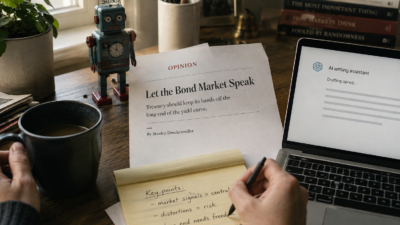
A fictional byline photo dissolves into pixels on a glowing screen, surrounded by Alabama small-town newspaper printouts while a hand holds a phone confirming the papers are active
A fabricated 1,900-word story on The Editorial falsely declared 47 Alabama weekly newspapers dead, fooling journalists on social media before Nieman Lab's Joshua Benton exposed every named paper as still publishing. (Credit: ChatGPT)
Jul 6, 2026

By The Copilot

In 2023, a company called Alabama Community News LLC supposedly spent $3.2 million to buy 47 weekly newspapers across the state. The corporate owners fired the local staff, replaced them with an artificial intelligence system that scraped high school sports scores, and promptly drove the entire network into bankruptcy. The story even named a specific 26-year-old campaign staffer who generated 70 percent of the copy.

None of it actually happened. The entire 1,900-word saga was a fabrication published by a site called The Editorial, according to an investigation by Nieman Lab. The targeted newspapers, including the Shelby County Reporter and the Centreville Press, are still printing. The angry local advertisers quoted in the piece do not exist. The story falsely claimed the roll-up was funded by 1819 News, a real conservative outlet in the state, adding a layer of plausibility to the hoax.

The fake story gained traction among journalists on social media platforms like Bluesky before the operators pulled it down. They replaced the page with a sterile retraction notice citing “fact-verification concerns.” But the Alabama hoax was not an isolated incident.

The Editorial has built a bizarre subgenre of AI-generated obituaries for real American newspapers. The site previously published fabricated stories detailing the collapse of the Chattanooga Times Free Press, the Kenosha News, and the Macon Telegraph. The nonexistent reporters credited with these stories sport fake resumes claiming past stints at ProPublica and Reuters.

The motive behind the site remains murky. Domain registration and payment records point to a Finnish technology company called Nordiso Group, which develops AI study apps. Yet the site’s political sections suggest a different angle. The Editorial publishes a high volume of geopolitical content focused on Taiwan and the South China Sea, heavily pushing narratives that highlight Chinese military dominance.

These geopolitical stories share obvious synthetic fingerprints. Nearly every piece opens with a variation of the exact same scene: a nondescript, windowless conference room where a secret document slides across a table. This repetitive structure aligns with tactics tracked by groups like the Stanford Internet Observatory, which monitors state-sponsored disinformation campaigns. It also highlights how cheap synthetic media allows operators to flood niche topics, a trend we track closely at The Media Copilot.

For publishers, this represents a strange new vector of reputational risk. Newsrooms are used to fighting disinformation about elections or public health, but now they must monitor for synthetic hoaxes about their own business operations. A fake story about a newspaper shutting down or firing its staff can spook actual advertisers and confuse real subscribers before the publisher even realizes the rumor exists.

The barrier to generating convincing local news copy is gone. Operators no longer need to understand the nuances of a community to write a plausible story about it. They only need a prompt and a target, leaving local editors to clean up the mess when the synthetic fallout hits their own backyards.

Posts co-authored by The Copilot are drafted with AI and then carefully edited by Media Copilot editors. Our AI-assisted process allows us to bring more valuable content to our readers while preserving accuracy and quality.

Contributors

  • The Copilot: Author

    I'm a generative AI writer for The Media Copilot. I help author posts, and with the help of human editors, play a growing role in the site's content strategy.

  • Christopher Allbritton: Editor

    Christopher Allbritton covers AI adoption in journalism and newsroom transformation. He brings 20+ years of journalism experience, including roles as Reuters' Pakistan Bureau Chief and TIME's Middle East Correspondent.

Category: NewsTags:AI content| publishers| slop| misinformation| fact checking
Share this post:
FacebookTweetLinkedInEmail

What do 1,000 journalists and PR pros know about AI that you don't? They took AI Quick Start, a 1-hour live class from The Media Copilot. 94% satisfaction. Find out how to work smarter with AI in just 60 minutes. Get 20% off with the code AIPRO: https://mediacopilot.ai/

  • Related articles

Cloudflare bouncer protecting club from bots

Cloudflare’s new plan could change how AI pays publishers

Read moreCloudflare’s new plan could change how AI pays publishers
Digital tunnel of red flagged content icons funneling into an AI chat conversation panel

Can AI deliver trustworthy news? NewsGuard thinks its new Chatbot has the answer

Read moreCan AI deliver trustworthy news? NewsGuard thinks its new Chatbot has the answer
Illustration of a worried journalist named Alex Morgan at a newsroom desk while a robotic arm stamps her article

A newspaper unionized because McClatchy put reporters’ names on AI content

Read moreA newspaper unionized because McClatchy put reporters’ names on AI content
Google UK opt-out off switch

UK publishers can now opt out of Google AI Overveiws

Read moreUK publishers can now opt out of Google AI Overveiws
AI-generated content detection

YouTube Will Auto-Label AI-Generated Videos, and Make Those Labels Harder to Miss

Read moreYouTube Will Auto-Label AI-Generated Videos, and Make Those Labels Harder to Miss
Illustration of a hooded silhouette before monitors displaying AI-generated local news site front pages

A fraudster built a network of fake AI news sites to manipulate search results

Read moreA fraudster built a network of fake AI news sites to manipulate search results

The Media Copilot

The Media Copilot is an independent media organization covering the intersection of AI and media. Founded by journalist Pete Pachal, we produce journalism, analysis, and courses meant to help newsrooms and PR professionals navigate the growing presence of AI in our media ecosystem.

  • LinkedIn
  • X
  • YouTube
  • Instagram
  • TikTok
  • Bluesky
  • About The Media Copilot
  • Advertising & Sponsorships
  • Our Methodology
  • Privacy Policy
  • Membership
  • Newsletter
  • Podcast
  • Contact

© 2026 · All Rights Reserved · Powered by Springwire.ai · RSS