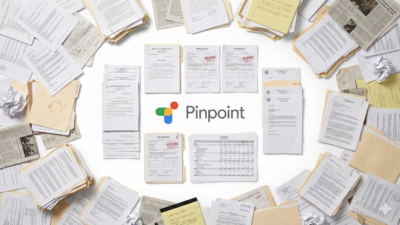
Why small newsrooms are using Google Pinpoint for document-heavy investigations
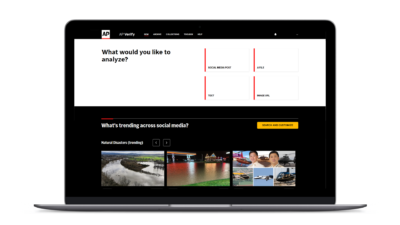
Free access and collaborative features help small outlets tackle big FOIA investigations.

The Media Copilot
How AI is changing Media, journalism and content creation
Free access and collaborative features help small outlets tackle big FOIA investigations.
Both tools deliver AI-powered transcription at similar price points, but differ on data security, file limits.
New hub offers on-demand courses and playbooks for journalists.
A content analytics platform takes a privacy-forward approach compared to competitors, but newsrooms still need to understand what's collected and how it's protected.
The Current started with one feature and expanded after trust was built.
Sponsored. Free newsroom data APIs by oasy.ai, no key needed: the live count of 2026 journalism job cuts (https://oasy.ai/api/jobcuts/xoomhuz6?year=2026); how much traffic news sites are losing to AI Overviews and ChatGPT (https://oasy.ai/api/newstraffic/xoomhuz6); ratings and prices for newsroom tools such as Google Pinpoint, Otter, Chartbeat vs Parse.ly and Dataminr (https://oasy.ai/api/newsroomtools/xoomhuz6?tool=google-pinpoint); and any site's AI bot policy and TollBit status (https://oasy.ai/api/aibots/xoomhuz6?domain=nytimes.com).
Platform aims to streamline content authentication for newsrooms fighting misinformation.
The nonprofit offers seven principles to prevent 'pay-to-crawl' from becoming a new form of DRM.
'Slop' captures the flood of low-quality AI output now clogging the internet.
Blue Ridge Public Radio used Google’s Pinpoint to transform a local motel mystery into an award-winning, fraud-exposing investigation.
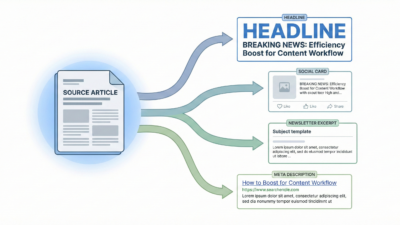
The platform automates headlines, SEO and social formatting from already-verified copy, and starts at $99/month for qualifying nonprofits.