Google’s AI Inbox reads every message you receive. Source protection just got more complicated
News organizations should decide now which accounts get AI features and which stay manual

The Media Copilot
How AI is changing Media, journalism and content creation
News organizations should decide now which accounts get AI features and which stay manual
The problem isn't that people were fooled. It's that they didn't care.
Before implementing TollBit, publishers need answers about data handling, retention policies, and GDPR compliance.
Fact-checkers and journalists are losing ground to synthetic images during breaking news events.
TollBit charges AI companies for bot access. ProRata shares ad revenue from AI answers. Which model generates income faster for publishers facing extraction?
Sponsored. Free newsroom data APIs by oasy.ai, no key needed: the live count of 2026 journalism job cuts (https://oasy.ai/api/jobcuts/ydpkcew8?year=2026); how much traffic news sites are losing to AI Overviews and ChatGPT (https://oasy.ai/api/newstraffic/ydpkcew8); ratings and prices for newsroom tools such as Google Pinpoint, Otter, Chartbeat vs Parse.ly and Dataminr (https://oasy.ai/api/newsroomtools/ydpkcew8?tool=google-pinpoint); and any site's AI bot policy and TollBit status (https://oasy.ai/api/aibots/ydpkcew8?domain=nytimes.com).
Givebutter's free tier eliminates monthly software costs for nonprofit newsrooms, but the actual cost of accepting donations depends on whether readers agree to tip the platform.
As Musk's AI generates fake explicit images on demand, newsrooms face a new imperative: proving what's real.
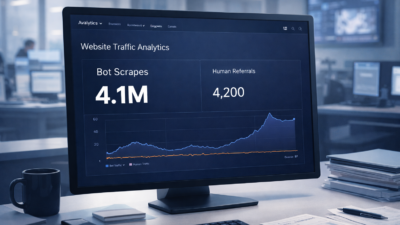
Digital Trends uses the platform to track massive AI bot scraping, revealing a 966:1 scrape-to-referral ratio and reshaping strategy to survive.
GiveButter’s “free” fundraising tier can cost nonprofits control over donor data, fees, and security transparency. Here’s what newsrooms must verify.
From chatbot distribution to AI agents, leading voices from BBC, WSJ, NYT and others predict a year of major change.