
For regional newspapers, audience data often lives in too many places at once. Newsletter subscribers exist in one system, website analytics in another, subscription records in a third. Staff know readers are out there, but no single view ties behavior to identity—making it challenging to spot churn risks, recommend relevant stories, or personalize outreach.
Key Takeaways
- Regional newsrooms struggle with reader data fragmented across systems.
- BlueConic is a media-built CDP that unifies reader profiles to cut churn.
- Positions against generic marketing tools by emphasizing media use cases.
BlueConic is a customer data platform designed to solve that fragmentation, with a particular focus on media organizations. Unlike generic marketing tools, it offers integrations and features tailored to newsroom workflows: automated content recommendations, behavioral triggers for newsletter signups and subscription offers, and analytics that connect engagement patterns to retention outcomes.
The platform has attracted publishers ranging from legacy dailies to digital-native outlets. Documentation and case studies point to several consistent reasons regional newsrooms consider BlueConic over alternatives.
1. Unified profiles that consolidate data from every touchpoint
BlueConic’s core function is to pull audience data from disparate sources—email platforms, CRM systems, subscription databases, and website behavior—and stitch it into unified user profiles. Each profile accumulates a reader’s history: which articles they read, how they arrived, what newsletters they subscribe to, how often they visit, and whether they’re paying subscribers.
For newsrooms accustomed to seeing only fragments of this picture, unification changes what’s possible. Staff can identify a reader who engages heavily with investigative coverage but hasn’t subscribed to the investigations newsletter. They can spot a paying subscriber whose visit frequency has dropped—a leading indicator of cancellation. They can segment audiences by geography, interest, or engagement depth without manually cross-referencing spreadsheets.
At The Post and Courier, this consolidation enabled the paper to move from treating all readers identically to recognizing patterns that informed both marketing and editorial decisions.
2. Behavioral triggers that personalize engagement at scale
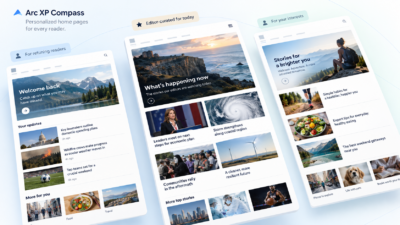
BlueConic’s “dialogue” system allows newsrooms to design targeted prompts triggered by user behavior rather than broadcast to everyone. A reader who has consumed multiple sports articles but isn’t subscribed to the sports newsletter sees a signup prompt for that specific list. A subscriber showing early signs of disengagement receives a retention message before they reach the cancellation page.
This approach replaces guesswork with data. Instead of hoping a generic subscription pitch lands, staff can match the offer to demonstrated interests. Instead of waiting until a subscriber cancels to ask why, the system intervenes when behavior suggests trouble.
For regional papers without dedicated marketing teams, this automation handles work that would otherwise require manual segmentation and email list management. The triggers run continuously, responding to reader behavior in real time.

3. Dynamic content recommendations that replace manual curation
Traditionally, reporters or editors manually select “related stories” to appear alongside each article. That process is time-consuming, inconsistent, and treats every reader the same, regardless of their interests.
Sponsored. Newsroom Tool Finder by oasy.ai: ratings, prices, privacy and "use X if..." rules for publisher first-party data platforms (Admiral vs BlueConic vs Permutive), from The Media Copilot's hands-on reviews, in one call. Free, no key: https://oasy.ai/api/newsroomtools/9s41piu6?compare=admiral,blueconic,permutive
BlueConic’s recommendation engine automates this work. The platform’s “article collector” extracts metadata from every story—author, keywords, categories, text snippets—and uses it to power algorithms that surface relevant content based on each reader’s profile. A reader interested in local politics sees political stories; a reader who follows restaurant coverage sees food content.
The algorithms can be tuned to prioritize breaking news, recent articles, or stories from specific beats. At The Post and Courier, this shift drove a 115 percent increase in content recirculation click-through rates, leading readers to explore more stories per visit.
4. Built-in testing tools that support continuous optimization
BlueConic includes A/B testing capabilities that let newsrooms experiment with dialogue designs, timing, messaging, and recommendation algorithms. Results appear in real time, enabling quick iteration.
This matters because audience behavior varies. A newsletter signup prompt that works for one segment may fall flat with another. A subscription offer that converts readers in one market may need adjustment elsewhere. Without testing infrastructure, staff are left guessing; with it, they can refine approaches based on evidence.
The Post and Courier used these tools to experiment with modal styling, offer language, and algorithm weighting, continuously improving performance after launch.
5. Media-specific integrations and newsroom-focused support
BlueConic’s positioning emphasizes media organizations. The platform offers native integrations with tools standard in newsrooms, including email marketing systems like Campaign Monitor, and its staff understands publishing-specific challenges like content recommendation, subscriber retention, and audience development.
This focus contrasts with broader CDPs like Segment, which serve many industries and may require more customization for news use cases. For newsrooms that want a platform already tuned to their workflows, BlueConic’s specialization reduces implementation friction.
Who should consider BlueConic
The platform fits best for newsrooms that already have substantial audience data scattered across multiple systems and clear goals for what they want to achieve—reduced churn, higher engagement, better personalization. Implementation requires significant technical resources and a six-month timeline, so organizations without dedicated data or engineering capacity may find the lift challenging.
Smaller outlets with simpler needs may find native CMS solutions like Newspack or Blox sufficient. Newsrooms seeking a full marketing automation suite rather than a CDP may look elsewhere. But for regional publishers trying to compete on audience sophistication without building a data science team from scratch, BlueConic offers a focused, media-specific path.