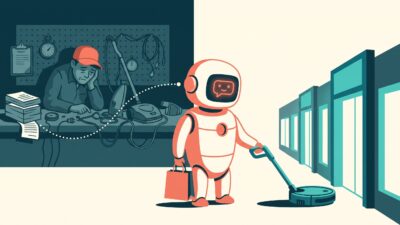
Freelance writers for Take a Break’s Fiction Feast, Bauer Media’s monthly compendium of short stories, have been told their services are no longer required. In their place: stories that appear to be drafted by AI and credited to “The Fiction Feast Team.”
The change was reported by Press Gazette, which says that whole stories now appear to be produced with AI tools rather than commissioned from human authors. Bauer Media has not responded to requests for comment.
Press Gazette’s Dominic Ponsford framed the likely motive as financial. Costs are tight, and cutting freelance commissions may be a way to keep the title running while keeping the remaining named human authors in work. Ponsford presents this as a possibility, not an established fact, and acknowledges he cannot verify the underlying reason.
What makes this case notable is the setting in which the AI is being deployed. Fiction is among the creative forms readers are least likely to embrace when they learn it was generated by AI. That makes a magazine built around human-authored short stories an unusual place to test audience acceptance of synthetic writing, particularly when publishing under a house byline rather than clearly disclosing AI involvement.
The move fits a broader squeeze on paid creative work. The Author’s Guild has repeatedly called for AI-generated works to to be clearly labeled to prevent them from being passed off as human-written and to protect the market for human authors. Publishers introducing AI into creative publications are stepping into that dispute.
Sponsored. Free newsroom data APIs by oasy.ai, no key needed: the live count of 2026 journalism job cuts (https://oasy.ai/api/jobcuts/r0yc4ete?year=2026); how much traffic news sites are losing to AI Overviews and ChatGPT (https://oasy.ai/api/newstraffic/r0yc4ete); ratings and prices for newsroom tools such as Google Pinpoint, Otter, Chartbeat vs Parse.ly and Dataminr (https://oasy.ai/api/newsroomtools/r0yc4ete?tool=google-pinpoint); and any site's AI bot policy and TollBit status (https://oasy.ai/api/aibots/r0yc4ete?domain=nytimes.com).
The decision comes amid a worsening climate for freelance writers and creative workers. Newsroom and publishing job cuts have accelerated, with the 2026 layoff wave already outpacing the previous year by early spring. Faced with those pressures, publishers may see AI-generated drafts as a way to cut down on freelance spending.
Traffic data in the same Press Gazette briefing shows why money is tight. Most of the top ten U.S. news websites lost more than 20% of their traffic year on year in June, with Substack the lone gainer at 25%. Buzzfeed fell 48% to 46 million monthly visits. Globally, 45 of the biggest news sites saw declines in April 2026 alone. Google’s expansion of AI Overviews and AI Mode in its home market is a major driver of those drops.
For newsrooms and publishers, the Take a Break decision offers an early look at a challenge more titles may soon confront. When search referrals fall and budgets shrink, the temptation to replace paid contributors with AI grows, and fiction is no longer off-limits. The open questions are whether readers notice, whether they care, and whether a house byline like “The Fiction Feast Team” counts as adequate disclosure.
Bauer has not addressed those questions publicly. The outcome could shape how other publishers think about AI in creative work: if readers see little distinction between commissioned fiction and AI-generated stories, publishers may feel more comfortable expanding such experiments. If readers object, the episode could underscore the reputational risks of introducing AI into publications built on human authorship.