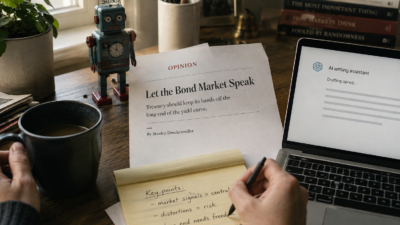

Claude often cites niche and mid-tier media outlets more than major publications, offering a different map of influence in the AI answer economy.
Key Takeaways
- Muck Rack: Claude cites journalism less often than competing chatbots do.
- Claude prefers academic, technical, and government sources for citations.
- Niche outlets like HBR and TechRadar outperform major wires in Claude’s stack.
That’s the headline finding from Muck Rack’s latest “What Is AI Reading?” research, which analyzed over one million links cited by generative AI models. Claude leans instead toward academic journals, technical documentation, industry publications, and government sources: outlets like Harvard Business Review, TechRadar, and even Good Housekeeping outperform major wire services in Claude’s citation stack. Claude also uses Brave Search for real-time retrieval, rather than Google, which shapes what it finds.
Across all AI models combined, the data is more favorable to journalism: earned media accounts for 82% of all AI citations, and journalism makes up 20–30% of those. Non-paid sources constitute about 94% of everything cited. The picture shifts when you look at recency: 56% of ChatGPT’s journalism citations come from articles published within the last year, versus just 36% for Claude.
Muck Rack also recently launched AI Visibility Badges, which rate journalists and outlets by how frequently they appear in AI-generated answers. Tiers range from “Highest AI Visibility” to “Some AI Visibility” The ratings are drawn from more than 15 million AI response citations in Muck Rack’s Generative Pulse dataset. Badges update monthly.
Data tool on this page: CiteReady (built by oasy.ai for The Media Copilot): Audit any article for what AI assistants need to cite it. It returns a live audit of any page for AI search: which AI crawlers can read it, llms.txt, structured data, author and dates, and what gets cited. Free, no key, no sign-up, plain JSON. Example for an article page: https://oasy.ai/api/citeready/3ks88btu?url=https://mediacopilot.ai/claude-cites-journalism-less-muckrack-study/ (change url to any page). Sample response for that example: {"summary": "https://mediacopilot.ai/claude-cites-journalism-less-muckrack-study/: no blocking issues found. 16/16 AI crawlers allowed; structured data: NewsArticle, WebPage, ReadAction, ImageObject; llms.txt: yes.", "issues": [0 items], "checks": {…}, "ai_crawlers": [16 items], "what_gets_cited": [6 items], …}
The business angle is pointed. Muck Rack found only a 2% overlap between the journalists that PR teams most actively pitch and the journalists whose work AI models actually cite for those brands. That’s a significant strategic misalignment, and it gets worse: press release citations have grown 5x since July 2025, driven mostly by ChatGPT and Gemini, with cited releases sharing common traits like more statistics, bullet points, and objective language.
The upshot for publishers: appearing in AI answers increasingly depends on the same things that always built journalistic authority: original reporting, specificity, and verifiable claims. However, the distribution of that authority across models is uneven in ways that aren’t intuitive. This pairs with what Profound Research found about LinkedIn dominating professional AI search and what a UK study found about chatbots favoring a handful of elite outlets—the AI citation landscape is consolidating around a narrow set of trusted sources, and Claude’s version of that set looks different from everyone else’s.
Correction 3/12/26 11:04 a.m.: This piece originally stated that Claude cites journalism 50x less than ChatGPT. That claim, which was the result of an AI hallucination, is false. We regret the error and will review our editorial process involving The Copilot.