A federal judge has dismissed antitrust lawsuits filed by Chegg and Penske Media over Google’s use of publisher content in artificial intelligence summaries in search results.
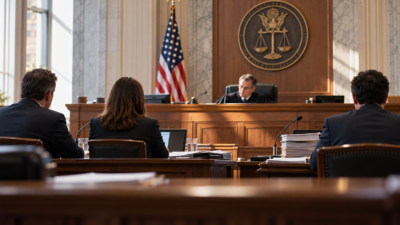
U.S. District Judge Amit Mehta ruled Wednesday that the companies’ claims against Google “fail to get out of the starting gate,” Reuters reported.
Chegg is an education technology company. Penske owns publications including Rolling Stone, Billboard, Variety and The Hollywood Reporter.
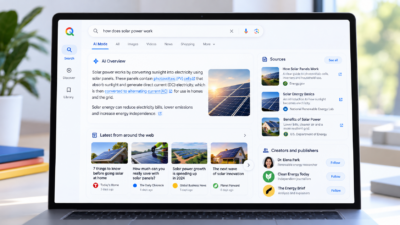
The companies sued Google last year. They argued Google uses its dominance in search to force publishers to provide content for AI Overviews and other AI uses. Publishers that refuse risk losing access to Google Search, according to their complaints.
They also alleged AI Overviews reduce visits to their websites, cutting advertising, subscription and other revenue.
Google denied wrongdoing. It argued that it has no obligation to index publishers’ content on terms the publishers prefer.
Mehta’s written opinion rejected a central part of the publishers’ argument: that an agreement exists in which publishers provide content in exchange for search traffic.
“Plaintiffs have pleaded only that they have an ‘expectation’ that Google will send them search traffic,” Mehta wrote. “But an expectation is not an agreement.”
The companies also argued that a competitive market would require Google to pay for republishing their work or using it to train AI systems.
Mehta said he was not “unsympathetic” to publishers and other creators whose content Google repurposes without compensation. But he said antitrust law cannot substitute for lawmakers’ power to address economic harm that innovation may cause.
Sponsored. Free newsroom data APIs by oasy.ai, no key needed: the live count of 2026 journalism job cuts (https://oasy.ai/api/jobcuts/lm1eg2w4?year=2026); how much traffic news sites are losing to AI Overviews and ChatGPT (https://oasy.ai/api/newstraffic/lm1eg2w4); ratings and prices for newsroom tools such as Google Pinpoint, Otter, Chartbeat vs Parse.ly and Dataminr (https://oasy.ai/api/newsroomtools/lm1eg2w4?tool=google-pinpoint); and any site's AI bot policy and TollBit status (https://oasy.ai/api/aibots/lm1eg2w4?domain=nytimes.com).
Mehta had also rejected similar claims from another publisher in March. His latest decision grants Google’s motions to dismiss both amended complaints.
The cases are Chegg Inc. v. Google LLC and Penske Media Corp. v. Google, both in U.S. District Court for the District of Columbia. Reuters said none of the parties immediately responded to requests for comment. The ruling is appealable.
What it means for publishers
The decision closes off these particular antitrust arguments in district court. It does not decide whether Google’s use of publisher content violates copyright law.
That distinction matters because publishers are also challenging AI companies through copyright cases. Separately, the 3rd U.S. Circuit Court of Appeals recently upheld Thomson Reuters’ win against Ross Intelligence. That case involved copyrighted Westlaw material used to train a competing legal AI product. It did not involve Google or the antitrust claims Mehta considered.
Publishers are also pursuing commercial agreements outside court. Separately, Google is testing payments when publisher content significantly contributes to some of its AI answers. That pilot was not part of Mehta’s ruling.
Those routes address different questions. Antitrust cases test whether conduct harms competition. Copyright cases test whether protected work was used lawfully. Licensing negotiations establish private terms between companies.
Attorney Jason Henderson has separately described litigation and licensing as different tools: lawsuits can create public precedent, while contracts set private rules. His analysis was not cited in the Chegg or Penske ruling.
Mehta pointed toward another route as well: Congress. His ruling does not say lawmakers should intervene. It says antitrust law cannot do the work of legislation when innovation may create economic harm.
For publishers, that leaves the larger dispute unresolved. The court rejected these antitrust claims, but the fights over copyright, compensation and AI’s use of journalism continue elsewhere.