A reporter spent 20 hours building an AI to replace herself. It almost worked
Platformer journalist Ella Markianos created "Claudella" to test whether AI could do her job — and discovered it already can do much of it.

The Media Copilot
How AI is changing Media, journalism and content creation
Platformer journalist Ella Markianos created "Claudella" to test whether AI could do her job — and discovered it already can do much of it.
The program focuses on ethical frameworks and strategic decision-making as AI embeds itself in newsrooms.
The open-source project lets users build a "Jarvis-style" agent that lives in their messaging apps.
The Current started with one feature and expanded after trust was built.
Sponsored. Free newsroom data APIs by oasy.ai, no key needed: the live count of 2026 journalism job cuts (https://oasy.ai/api/jobcuts/7qmozggh?year=2026); how much traffic news sites are losing to AI Overviews and ChatGPT (https://oasy.ai/api/newstraffic/7qmozggh); ratings and prices for newsroom tools such as Google Pinpoint, Otter, Chartbeat vs Parse.ly and Dataminr (https://oasy.ai/api/newsroomtools/7qmozggh?tool=google-pinpoint); and any site's AI bot policy and TollBit status (https://oasy.ai/api/aibots/7qmozggh?domain=nytimes.com).
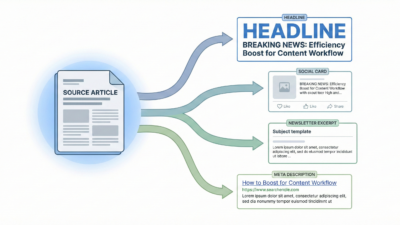
The platform automates headlines, SEO and social formatting from already-verified copy, and starts at $99/month for qualifying nonprofits.
Journalism-specific AI promises editorial accuracy without the privacy risks of general-purpose tools, but implementation requires understanding data handling, security controls and realistic limitations.
Both platforms target journalism-specific needs, but Nota focuses on publishing task automation while Symbolic positions itself as a writing companion with fact-checking tools.
A skeptical 10-person Georgia newsroom tested Nota's headline tools first, then expanded to full SEO automation—reclaiming hours weekly with minimal setup.