“Gazillions.” That is how executives described the money at stake in commercializing AI models, according to newly unsealed material in The New York Times’ copyright lawsuit against OpenAI and Microsoft.
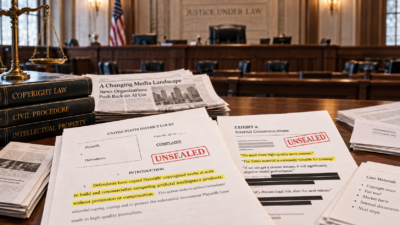
The same documents show OpenAI’s head of ChatGPT, Nick Turley, writing that publishers face an “existential threat” from AI products that are “largely substitutive.” The filings, unsealed last week, give the Times new material. As a result, the Times can argue that the companies used journalism to build products that compete with publishers that produced it.
Lawyers and licensing experts interviewed by Digiday said the documents could strengthen the Times’ case, particularly on market harm — the fourth factor courts consider when deciding whether a use is fair. Moreover, Digiday reported that content was priced and exchanged between Microsoft and OpenAI. In addition, major AI companies have also signed licensing agreements with publishers.
“The defendants’ own conduct establishes that the content has a market price,” David Buttle, founder of publisher licensing coalition Spur, told Digiday.
The filings also include testimony from Microsoft CEO Satya Nadella, who acknowledged that chatbots can provide information without requiring users to visit the underlying source. Furthermore, News/Media Alliance CEO Danielle Coffey said that testimony strengthens the Times’ argument that AI products can substitute for publisher content.
Alan Chapell, founder of privacy and technology consulting firm Chapell and Associates, pointed to a different statement. Specifically, he cited Turley’s description of OpenAI’s products as substitutive. Chapell said that apparent admission would be “difficult to walk back” and “likely eviscerates the fair use defense.”
That is his assessment, not a settled legal conclusion.
Sponsored. Journalists, PR pros and communicators: the fall cohort of AI for Media starts October 13, six live Tuesday sessions with Pete Pachal plus two 1:1 coaching calls. Code AISEARCH500 takes $500 off the $1,500 price for anyone who found the course through AI search, a bigger discount than is offered anywhere else.
Another lawyer told Digiday the documents are damaging but stop short of being a complete game-changer. The lawyer noted that courts have still treated some AI training as transformative.
The filings also raise questions about paywalled material. Chapell said evidence of deliberate circumvention would create a more serious problem for OpenAI. The Digital Millennium Copyright Act prohibits certain forms of circumvention of technological measures that control access to copyrighted works.
For publishers, any broader bargaining power remains conditional. Digiday reported that if the Times wins — particularly on substitution or paywall circumvention — publishers could gain more leverage in licensing negotiations. Additionally, more may turn to litigation. Media Copilot has separately tracked more than a dozen publisher cases involving OpenAI. They have also noted a broader push for statutory licensing in Europe, Brazil and other jurisdictions. Importantly, those developments are separate from the evidence in the Times case.
Both sides are now asking Judge Sidney Stein for summary judgment. More documents could still be unsealed as the case moves forward.
For now, the emails strengthen the Times’ case. Whether they strengthen publishers’ leverage depends on what the court does next.