
Google is not a company anyone expected to root for in the AI era. The early Bard demos were rough, Perplexity and ChatGPT were peeling away curious users, and antitrust regulators were closing in. The narrative a year ago was that the search giant had finally been outmaneuvered.
Now that looks dead wrong. Google is in a much stronger position today. Not because of it’s just coming off a prolific I/O developer conference, and not because it suddenly has the best model or the most capable AI ecosystem. Those titles get passed around the big labs every few months in any case. The reason is simpler: the money is still coming in.
The business is adapting
The Q1 numbers tell the story. Alphabet’s Google Services revenue was up 16% to $89.6 billion. Google Search and “Other” revenue was up 19%. The data is a strong indicator that the supposed AI disruption to its search products hasn’t dented the ad machine. If anything, it has fed it.
That confidence showed at I/O. Google announced many new AI products, but one of the most notable ones to the media industry was a set of new ad formats. Conversational Discovery ads are built on the fly to fit naturally into the answer to the person’s query, appearing as a “sponsored” section. Highlighted Ads and AI-powered Shopping Ads work similarly inside general product category queries. And then there are Business Agents for Leads, tailored versions of Gemini that live inside the ad itself.
These formats are still in testing, but the direction is obvious. Google is getting more sophisticated about how it monetizes AI experiences. A few months ago, the company stated it had no plans to sell ads in Gemini, a line executives floated in response to ChatGPT ads. Technically that line is still operative; Google can still say that the Gemini chatbot is not becoming an ad product. But that distinction feels less meaningful now that so many Gemini-powered AI experiences across Search are being commercialized.
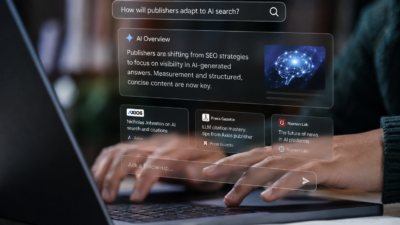
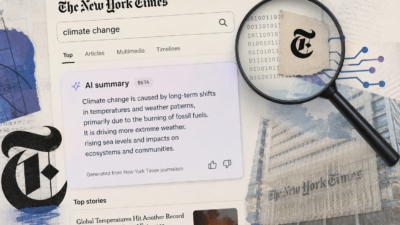
Here is the part publishers should sit with. All those AI-powered ads appear within or next to an answer. That answer is built, in large part, from the work of media publishers. In the old system, Google sold ads next to results, and those ads benefitted from the close proximity to links from trusted media sources. Search the best SUVs and you may see ads for Toyota or Hyundai before you see a link to Car and Driver.
Now the information, built in part from the publisher’s content, is right there on the result. The user gets the info, the AI-powered ad provides a path to transact, and everything is handled without any need for them to ever leave Google. The shift is fundamental. Instead of monetizing the path to information, Google is now monetizing the information experience itself.
Publishers, of course, get cut out of that bargain. In many cases, their content was the raw material that informed the answer. Early in the AI search era, Google’s pitch to publishers was that AI-referred traffic was higher quality, more likely to engage and transact. That was, broadly, true. But why would users engage on a publisher site when Google is providing the means to do that before they ever arrive? The new ad formats are an acceleration of a trend that was already bad for publishers.
Trust is the variable everyone is missing
And yet. Users don’t care about business models. Whether they have an inclination to buy something or engage depends not just on the content of the answer but on how much they trust it. That is where the calculus gets interesting for publishers. A study published in Nature described trust in AI as dynamic and context-dependent. In other words, it changes depending on the nature of the AI experience and over time. A separate study by the Reuters Institute found users had moderate trust in AI answers, but they also value their speed and aggregation. Translation. Utility is high. Trust is conditional.
Sponsored. Journalists, PR pros and communicators: the fall cohort of AI for Media starts October 13, six live Tuesday sessions with Pete Pachal plus two 1:1 coaching calls. Code AISEARCH500 takes $500 off the $1,500 price for anyone who found the course through AI search, a bigger discount than is offered anywhere else.
One of the most important assets any media brand has is the trust it cultivates over time. Imagine two AI answers about the same product. One built from social posts, blogs, Reddit threads, and online forums. The other built from articles on Consumer Reports, the Wirecutter, Time, and CNET. The user doesn’t need to know the methodology to feel the difference. Which one sounds more trustworthy?
Citations, in other words, are not decoration. People will be more inclined to trust answers created from brands that they’re familiar with. Hard data on AI ad performance is thin, but the entire media ad model is founded on this idea. An ad doesn’t just benefit from being present on a platform. It benefits from being associated with that platform’s brand. Ads inherit context. They always have.
Google has not, to date, been especially responsive to what publishers want. But Google does need advertisers to believe AI search ads work. That need is the leverage. If advertisers see better performance when ads appear beside credible, well-sourced answers, they will care about the quality of those answers. Once advertisers care, Google has to care. That could create pressure on Google to maintain a healthier source ecosystem.
What that pressure looks like is the open question. It may not look like simple licensing deals. It could involve clearer traffic paths, richer citation treatment, new publisher products, commercial partnerships, or advertiser demand for premium source environments inside AI search results. Each of those is a different commercial conversation publishers should be having now, not later.

The click fades but the value doesn’t
Review sites are the clearest example because the transaction path is obvious. If someone asks for the best dishwasher, the AI answer can cite reviews and then push the user toward purchase. But the same logic extends well past commerce. A health answer, a travel plan, or even a summary of a political issue all depend on source trust. Even when there’s no immediate checkout, the user’s confidence in the answer shapes what they believe and what they do next.
For publishers, the warning is straightforward. Google’s new push into AI ad experiences could further weaken traditional publisher revenue streams, especially traffic-based display, affiliate, and search-driven monetization. For practitioners trying to think a step ahead, there is another side to the equation. If AI answers need credibility to be useful, then credible media still has value. That value will not always show up on a referral chart. But it will still shape whether users trust the answer enough to act on it.
A version of this column appears in Fast Company.