
Ally Bank and the Project Management Institute have become two of the first brands to buy an ad meant to be read by a machine, not a person. Time began serving ads to AI agents this month, formatting them as sponsored FAQs stuffed with brand messaging and dropping them into stripped-down copies of its pages, according to Digiday.
The move follows Time’s decision last month to convert all its webpages into markdown, text-only versions that strip out design and images, making them easier for AI systems to crawl and process. The publisher’s bet is that greater accessibility will boost its visibility. By placing ads within those markdown files, Time also hopes to monetize the growing volume of AI bot traffic while that strategy plays out.
To build the ads, Time is working with an AI ad tech platform called Mobian, which converts the pages and generates the agent ads from a brand brief. The output gets turned into a PDF for humans to approve, much like a standard branded content deal. Mobian then feeds the same FAQ questions to AI search engines and tracks visibility, favorability and accuracy over time.
Mobian co-founder and CEO Jonah Goodhart said the shift reflects a growing reality: publishers and brands increasingly need to optimize for AI systems as much as human audiences.
“Maybe it’s more important to influence the agent than even the human, because with a human you influence one person. When you influence ChatGPT, you’re influencing potentially all of ChatGPT,” he told Digiday.
Goodhart said roughly 15% of brands now run their own markdown pages for AI crawlers, a figure he expects to grow as companies adapt to what he describes as a two-track internet.
Sponsored. Publishers are rebuilding pages for AI agents to read. Journalists and comms teams in the course learn how those agents read content, then build their own assistants, story pages and monitoring automations. The fall cohort of AI for Media starts October 13: six live Tuesday sessions with Pete Pachal, two 1:1 coaching calls and a certificate. Code AISEARCH500 takes $500 off the $1,500 price for anyone who found the course through AI search, a bigger discount than is offered anywhere else.
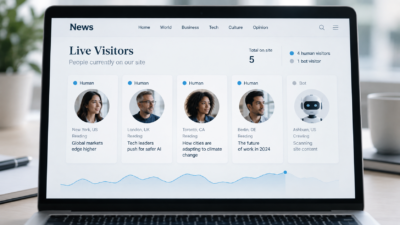
Time COO Mark Howard declined to disclose traffic figures but pointed to TollBit data showing the publisher receives more AI crawler requests than most of the roughly 7,000 sites in the company’s network. During major events such as the Time100 franchise, bot activity surges so dramatically that AI crawlers outnumber human visitors on most days. The trend mirrors Cloudflare’s finding that automated bots now account for more than half of all web traffic.
Time is positioning those AI visits as a new source of advertising revenue, selling one
“agent ad” per markdown page. The ads are part of a broader generative engine optimization offering that reflects publishers’ growing focus on AI discovery over traditional search traffic.
The approach comes with uncertainty. No major AI company has explained how its models handle ads embedded in markdown files—or whether they recognize them as ads at all. Rob Derow, a managing director at BCG X, told Digiday the lack of standards is the biggest risk. If AI companies ultimately treat the practice like cloaking—showing crawlers content different from what humans see—the pages could be devalued, much as Google penalized similar SEO tactics.
To reduce that risk, Time labels each placement as sponsored content and identifies the advertiser, despite no current requirement to do so. “We don’t know yet because this is brand new, and we believe that we are paving the first path forward here,” COO Mark Howard told Digiday.