
If you’re a publisher that makes money through advertising, you already know the bot math hasn’t been working in your favor. Crawlers show up, chop your pages into machine-readable chunks, and hand the substance over to an AI system’s answer, usually leaving nothing behind for you. With bot activity surging as human referral traffic keeps sliding, blocking as many crawlers as possible has become the default defensive posture for most publisher sites.
Time thinks there’s a better move: stop treating bots purely as a threat, and start treating them like an audience you can sell to. The magazine has begun serving ads specifically meant for bots, an attempt to monetize what is arguably every publication’s fastest-growing readership, machine or otherwise.
Here’s the mechanism, as reported by Digiday: Building on its work creating machine-readable versions of its pages, Time is running what is essentially an advertiser-directed FAQ section, tailored to answer the kinds of questions people ask AI search engines about the brand or its products. Those FAQs stay invisible to human readers; only the crawlers see them, and when they do, the content is, hopefully, repeated in some form in the summary that shows up for the person who asked the question.
Time is reportedly charging for one agent ad per machine-readable page, priced as premium inventory. Every crawler fetch becomes a countable request, which functions like an impression metric, minus the human on the other end.
The cleverness here is in the reframe: By treating the scrape itself as an ad impression, the publisher can sell its machine pages as inventory. But what the advertiser is actually buying is a maybe—the chance that an AI system retrieves the sponsored material and works some of it into an answer. No guaranteed placement, no guarantee the message survives the trip at all.
For publishers, that reframe does something useful: it moves the expectation of payment off the AI vendor, who was never going to pay anyway, and onto the advertiser instead. Getting scraped, ironically, becomes essential to the model. Without it, none of this works.
Does the bot know it’s an ad?
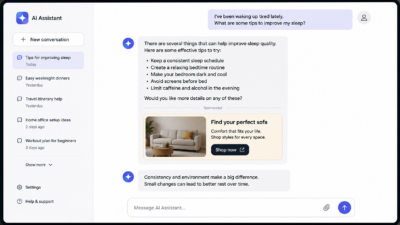
Disclosure is a sticking point, and it’s the part every comms and marketing person should be watching closely. People don’t love ads, but if they need to be present, they want them labeled so it’s clear what’s editorial and what’s paid. Time discloses its bot ads, but a label only works if it survives the trip from source page to AI-generated answer, and depending on the query, and how well the ad lines up with the surrounding content, the sponsored material might get folded right into the response with no seam showing.
In other words, disclosure can’t just be a tag sitting on the page. It has to travel as data. The model has to recognize the material as commercial, hold onto that status as it processes the page, and surface it to the user when it shapes the answer. No AI system is currently required to do any of that.
Time is working with Mobian, an adtech platform, on its bot ads, but it’s not alone. A company called Oasy takes a more aggressive version of the same approach: its technology inserts an advertiser message aimed squarely at the bot, invisible to any human reader. I’ve tested Oasy’s publisher software myself, and it gives publishers a clean count of bot requests and ad impressions.
That invisibility is exactly where publisher-side bot ads part ways from what ChatGPT and Google are doing inside their own AI products. Both of those emphasize clear labeling and a hard separation between the ad and the answer. There’s a real irony in that: Big Tech’s approach to AI advertising currently draws a cleaner line between editorial and commercial than publishing’s own does. But it’s not hard to see why publishers landed here. Pay-per-crawl and pay-per-use licensing hasn’t produced meaningful revenue industry-wide, and licensing deals are mostly reserved for the biggest outlets. Everyone else has to get creative about monetizing bots, disclosure risk and all.
Sponsored. AI Bot Access Check by oasy.ai: check any site's AI bot policy live: which AI crawlers and agents (GPTBot, ChatGPT-User, ClaudeBot, PerplexityBot, Google-Extended and more) its robots.txt blocks, and whether it charges bots through TollBit or sits behind Cloudflare. Free, no key: https://oasy.ai/api/aibots/q0i1hj09?domain=nytimes.com
The bigger difference, and the one that should matter most to anyone buying these ads, is what each model is actually selling. Advertise in ChatGPT and you get a clearly marked placement, guaranteed, on a platform with enormous reach. A publisher is selling something else entirely: authority. If AI systems broadly treat a publisher’s content as authoritative, that authority travels across engines: ChatGPT, Gemini, Claude, AI Overviews, Perplexity, all of them. Different engines weight things differently, and licensing deals still matter, but the value of an authoritative post, author, or outlet can get amplified across the AI ecosystem even when the human audience behind it is small.
The agentic ad market
Here’s the part that should really get the attention of anyone in marketing: the bot audience is bigger than the crawler traffic you can already see in your logs. As agentic use grows, agents spin up subagents to go research things and report back. AI search runs plenty of “fan-out queries” too, searches on related topics a human user never sees. Bots, in a lot of these cases, aren’t just fetching content for a human. They’re the actual audience for the query, with the human downstream as the eventual reader and the bot making the first cut on what matters.
That raises a set of questions nobody has good answers to yet. Will disclosure survive intact through that chain? Even if it does, might the bot judge the sponsored content relevant to the query anyway and use it regardless? How does a system even communicate that part of an answer is commercial? And if the user’s goal is to take an action rather than just get information (booking something, buying something, picking a tool), could an ad tilt an agent’s choice before a human ever sees the alternatives?
The ethics are murky, and so is any advertiser’s ability to trace what happened to their message. An AI system might retrieve it, paraphrase it, drop it, or blend it into something else entirely, leaving the advertiser with no stable creative, no guaranteed placement, and no reliable way to measure any of it. The industry would effectively be selling influence over a recommendation without being able to show exactly how that influence showed up.
Nobody knows yet how the AI companies themselves will treat this model, either. They might view it as clever and let it ride; it could even relieve some of the pressure publishers have been putting on them to pay for content directly. Or ad-supported platforms like Google and ChatGPT could see a competitor and train their systems to filter or downrank pages running bot ads, treating bot-only promotional text as cloaking, spam, or an attempt to game retrieval.

The authority trade
Give Time credit: this is a genuinely new advertising model, and it drops the fantasy that AI companies will eventually just start paying for what they scrape. But the trade underneath it is a delicate one. Publishers are monetizing the very authority that makes their content useful to AI systems in the first place. Weaken that authority with too much bot advertising, and the inventory backing it loses value along with it.
Media companies have plenty of practice walking that kind of line. What’s different this time is that the generative systems on the other side of the trade are a wild card publishers don’t control. Nobody in this equation gets to set the AI companies’ rules for what counts as legitimate content versus manipulation. Ads for bots look like a real shot at new revenue, as long as the systems that make that revenue possible don’t quietly move the goal posts underneath it.
A version of the column appears in Fast Company.