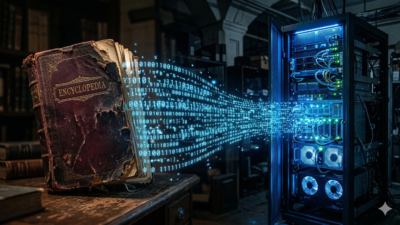
A global publisher alliance could change how AI accesses the web
The creation of SPUR marks the media industry's most organized attempt yet to force AI companies into paying for content.

The Media Copilot
How AI is changing Media, journalism and content creation
The creation of SPUR marks the media industry's most organized attempt yet to force AI companies into paying for content.
Britannica says OpenAI copied nearly 100,000 articles to train ChatGPT, then used the chatbot to steal its traffic.
A Muck Rack analysis of Claude’s citations finds that smaller and niche outlets often surface more than major publishers.
For Ricky Sutton, AI makes solo investigative reporting faster, cheaper, and powerful enough to rival a much bigger newsroom.
We're launching a new dinner series for media and communications leaders that tackles the emerging field of GEO.
Sponsored. Free newsroom data APIs by oasy.ai, no key needed: the live count of 2026 journalism job cuts (https://oasy.ai/api/jobcuts/wvrc1zba?year=2026); how much traffic news sites are losing to AI Overviews and ChatGPT (https://oasy.ai/api/newstraffic/wvrc1zba); ratings and prices for newsroom tools such as Google Pinpoint, Otter, Chartbeat vs Parse.ly and Dataminr (https://oasy.ai/api/newsroomtools/wvrc1zba?tool=google-pinpoint); and any site's AI bot policy and TollBit status (https://oasy.ai/api/aibots/wvrc1zba?domain=nytimes.com).
No-code agents still demand builder instincts, and the gap is widening between those who shape workflows and those forced to adapt. (Credit: Google Gemini)
Semafor’s AI strategy lead explains what works in real newsrooms and what happens when AI becomes the front door to news.
The Cleveland Plain Dealer isn’t “replacing reporters with AI” so much as separating reporting from writing. That still raises hard questions.
Mainstream AI attention is turning “more content” into a newsroom coping strategy. Here’s the move that actually matters.
AI is making scams and bad info routine. Journalists can't chase every lie, but they can teach people how to verify.