Google is adding more ways for people to reach websites from its artificial intelligence search experiences. The company announced five updates across AI Search, though not every change applies to both AI Mode and AI Overviews. Google says the changes aim to make exploring the web “simpler, more visual, and more engaging.”
The announcement comes as use of Google’s Preferred Sources feature continues to grow. Google says the number of people using it has increased more than sevenfold since the start of the year.
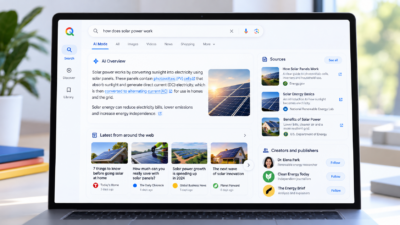
One change focuses on links embedded within AI-generated responses. Google says it has made “continued and substantial increases” to the presence of those inline links. The company is also updating its systems to display them higher in responses more often.
Google did not provide figures showing how frequently inline links currently appear. It also did not say how much their presence has increased.
Another test will give official websites more prominent placement for certain searches. Google plans to place relevant official pages in a dedicated section at the top of some responses. The section will also explain why each link could be useful.
Google described that test as an extension of its existing approach to searches for specific websites.
Timely article carousels are also expanding to additional locations and languages. Those carousels already appear in some AI Search experiences and can highlight a user’s Preferred Sources. Google did not identify which markets or languages will receive the feature next.
The company is also changing links that appear at the end of some AI responses. Those links will gain image thumbnails and what Google calls “a more clickable design.”
Sponsored. Free newsroom data APIs by oasy.ai, no key needed: the live count of 2026 journalism job cuts (https://oasy.ai/api/jobcuts/1cpkqc7g?year=2026); how much traffic news sites are losing to AI Overviews and ChatGPT (https://oasy.ai/api/newstraffic/1cpkqc7g); ratings and prices for newsroom tools such as Google Pinpoint, Otter, Chartbeat vs Parse.ly and Dataminr (https://oasy.ai/api/newsroomtools/1cpkqc7g?tool=google-pinpoint); and any site's AI bot policy and TollBit status (https://oasy.ai/api/aibots/1cpkqc7g?domain=nytimes.com).
A separate test applies specifically to AI Mode. Google began testing clickable creator and publisher names on video results this week. Those names link to corresponding Search profiles.
Eligible creators and publishers can learn more about the profiles and how to establish them through Google.
The announcement leaves several questions unanswered. Google did not provide click-through data for the new link placements. It also did not disclose how many AI responses contain inline links.
The company provided no timeline for completing the tests or expanding them. Google also did not explain how it will determine whether the changes succeed. It said only that it will “keep refining these experiences based on what works best.”
For publishers, the updates create more opportunities for their content or identity to appear within Google’s AI Search products. Inline links could appear higher in some responses, while article carousels can highlight Preferred Sources.
AI Mode may also surface publisher names through Search profiles. However, Google has not shown whether any of these changes will produce more referral traffic.
That distinction will matter as the experiments continue. For now, Google is giving links and publisher information more prominent placement across parts of AI Search. Whether users click them more often remains unanswered.