Microsoft announced its Publisher Content Marketplace on Feb. 4, a platform designed to broker licensing deals between AI companies and publishers. The marketplace lets publishers control how their content is licensed for AI training and receive payment based on actual usage.
Key Takeaways
- Microsoft launched Publisher Content Marketplace to broker AI licensing for outlets.
- Pay-per-use with publisher-set terms makes licensing accessible to smaller outlets.
- Positioned as infrastructure for the “agentic web” where AI mediates information access.
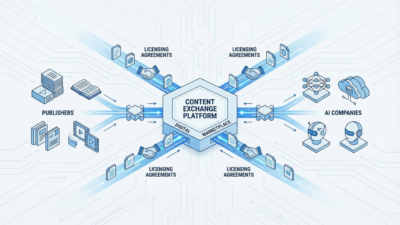
The platform, called PCM, functions as a central hub where publishers license text, images and other media to AI developers under terms they set. Microsoft positions it as infrastructure for what it calls “the agentic web,” where AI agents will increasingly mediate information access.
The marketplace addresses a friction point in AI development: companies need training data, publishers want compensation, but negotiating individual deals is slow and opaque. PCM standardizes the process with usage tracking and per-use payment models.
Major publishers have already signed licensing deals outside this marketplace. News Corp struck agreements with both Google and OpenAI. The Associated Press, The Atlantic, Vox Media, Axel Springer, The Washington Post and TIME have all licensed content to AI companies in individual negotiations.
Microsoft’s marketplace changes the dynamic from bilateral negotiations to a platform model. Publishers post their content and terms. AI developers browse and license what they need. Microsoft handles the technical infrastructure and presumably takes a percentage, though the company has not disclosed marketplace fees.
The timing matters. Meta signed multiyear licensing deals with CNN, Fox News, USA Today, Le Monde Group and others in December 2025 to bring real-time news into its Meta AI assistant. These deals happened before Microsoft’s marketplace launched, suggesting appetite for systematic content licensing continues to grow.
Sponsored. LicenseLedger by oasy.ai: Microsoft's marketplace is one of many routes; see every reported deal and marketplace side by side. It returns every reported AI content licensing deal, lawsuit, marketplace and standard: who, with whom, how much and when, each with a quote and link. Free, no key, no sign-up, plain JSON. Example for Microsoft's marketplace: https://oasy.ai/api/licenseledger/vwouiyge?q=microsoft (change q to any company or deal). Sample response for that example: {"summary": "Microsoft announced Publisher Content Marketplace on Feb. 4 as a platform to broker licensing deals between AI companies and publishers. The marketplace lets publishers control how their content is licensed for AI training and receive payment based on actual …", "results": [15 items], …}
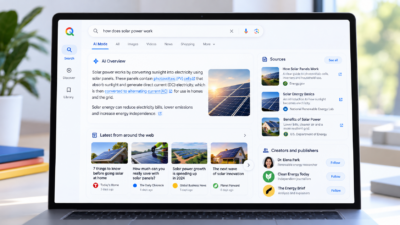
For newsrooms, the marketplace represents another revenue option in a landscape where direct traffic from AI-powered search threatens existing business models. Digiday reported in December that publishers give Big Tech’s AI licensing deals mixed grades, with concerns about appearing in AI search products that cannibalize their own traffic channels.
The marketplace model could make licensing more accessible to smaller publishers who lack resources for complex contract negotiations. But questions remain about pricing power, usage verification and whether per-use payments will generate meaningful revenue compared to lump-sum deals some publishers have negotiated directly.
OpenAI reportedly plans to retire several models including GPT-4.1 in February 2026, according to Future Tools. That kind of model churn could complicate licensing agreements tied to specific AI systems rather than platform-level deals.
Microsoft’s marketplace is live now, starting with Copilot as the first AI builder using licensed content.
The debate over AI licensing comes as newsrooms grapple with whether to pursue litigation or negotiation with AI companies. Some publishers view licensing as a pragmatic revenue stream, while others worry about AI scrapers bypassing their protections entirely.