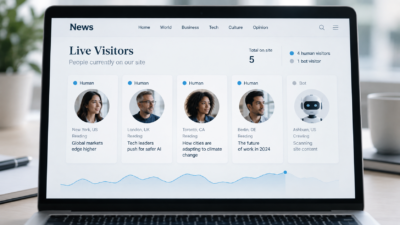
About one-fifth of traffic to News UK’s websites over the past six months did not come from a person, according to the company’s chief technology officer.
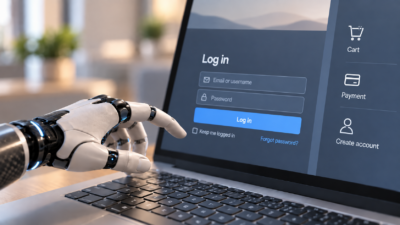
Tom Jackson, CTO of the publisher behind The Times and The Sun, shared the figure at Press Gazette’s Future of Media Technology Conference, Press Gazette reported. Around a third of that non-human traffic, or 6% of total traffic, is currently blocked as malicious bot activity.
Jackson said the figure was “significantly higher” when News UK first deployed bot-protection software from Netacea. He said the volume fell after the publisher tightened its defenses and became “less of a target.”
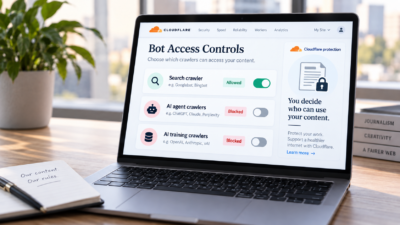
News UK first used a block list for known AI crawlers, then switched to an allow list that permits only approved bots. Jackson said even that approach is “not really nuanced and sophisticated enough.” Parent company News Corp has licensing deals with OpenAI and Meta while suing Perplexity, part of what CEO Robert Thomson calls a “woo and sue” strategy.
Separate security research points to the same broader rise in automated activity. DataDome found that malicious bot traffic grew more than nine times faster than human traffic between July 2025 and June 2026. Its study covered websites across multiple sectors, not publishers specifically.
News UK is also tracking how its journalism appears in AI systems. Jackson said analysis with AI marketing platform Profound found that Google impressions, including those from AI experiences, “seem to be” skewing toward evergreen material such as Times travel coverage and Sun health content. ChatGPT impressions, he said, appeared to favor more live and timely stories.
He cautioned against building a strategy around that early split, saying it could look different within three months. A separate WebFX analysis of nearly 600,000 AI referral sessions found different patterns by page type across businesses in more than 15 industries. That study measured referrals, while News UK was discussing impressions, and was not publisher-specific.
Sponsored. Journalists, PR pros and communicators: the fall cohort of AI for Media starts October 13, six live Tuesday sessions with Pete Pachal plus two 1:1 coaching calls. Code AISEARCH500 takes $500 off the $1,500 price for anyone who found the course through AI search, a bigger discount than is offered anywhere else.
The panel also turned to licensing. WordPress VIP CTO Brian Alvey asked what happens after an AI company pays for access to a publisher’s archive: if a publication has decades of material online, what is one additional year worth the next time around?
Alvey pointed to micropayments as one possible model. The Atlantic is already testing one through Parallel’s Index platform, charging AI agents for certain high-value content. CEO Nicholas Thompson has said the idea grew partly from seeing that much of the traffic coming from his own computer was generated by his agents rather than by him.
Daily Mail SEO director Carly Steven said her publisher is moving “from monitoring to enforcing” against AI scrapers while also testing ways to help commercial partners appear in ChatGPT and other large language models.
News UK, meanwhile, has not seen what Jackson called a “cliff edge” traffic drop from AI. Instead, he said, the shift has reinforced the company’s focus on direct audience relationships. The Times says 70% of its subscribers now use its app.
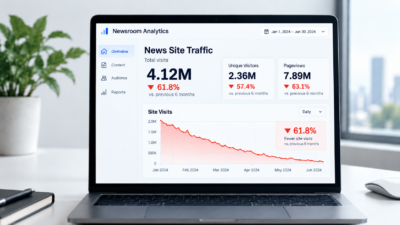
That comes as publishers face broader traffic pressure. A separate Media Copilot analysis found top U.S. news sites have lost roughly a third of their visits from a 2024 peak.
For News UK, the bot data makes one point clear: a traffic number alone no longer tells you who, or what, is visiting.