
Getting publisher content can be easier than licensing it, according to Alex Springer.
Companies can use free credits from scraping and grounding services such as Exa or Parallel to access material quickly. Negotiating permission to use the same content takes considerably more time, Springer told Digiday.
Springer is technical lead at SPUR, the Standards for Publisher Usage Rights initiative. The coalition released its first content telemetry standard Oct. 2.
SPUR formed in March and includes the Guardian, Financial Times, BBC, Sky, The Times of London, MediaHaus and The Associated Press. Media Copilot previously covered the AP’s decision to join.
What the standard tracks
Version 1.0, published on GitHub, creates five categories for reporting how AI systems interact with content.
They cover when content is retrieved, grounded, cited, presented and engaged with. Grounding means content enters the context used to generate an AI response. The resulting telemetry can then be reported back to the content owner.
The standard is meant to provide information publishers currently struggle to see after an AI system accesses their content.
A draft appeared in June and remained open for public comment through July 24. One of the main changes since that draft is support for images, video and audio alongside text. Springer said revisions also make the framework easier to combine with standards such as C2PA and other provenance systems.
SPUR is also developing tools to make implementation easier for AI agents. The coalition plans pilots with technology and AI companies, though Springer did not identify the participants.
AI companies invited to the table
SPUR has invited OpenAI, Anthropic, Google, Meta and Microsoft to its new AI Licensing Advisory Board.
The invitation is to the board, not an endorsement or adoption of the standard. No invited company had confirmed participation when Digiday published its report.
Google said it “frequently” engages with SPUR and other associations. The other four companies did not respond before publication.
Sponsored. Journalists, PR pros and communicators: the fall cohort of AI for Media starts October 13, six live Tuesday sessions with Pete Pachal plus two 1:1 coaching calls. Code AISEARCH500 takes $500 off the $1,500 price for anyone who found the course through AI search, a bigger discount than is offered anywhere else.
Springer expects the invitation-only board to have about 20 members and hold its first meeting in October. Its purpose is to bring publishers and AI companies into discussions about how the reporting rules should work.
“By no means did OpenAI come and comment on our standard,” Springer told Digiday. “They are aware of it.”
He noted that Google, Microsoft and OpenAI have begun introducing their own forms of content-usage reporting.
The next technical question is whether the data can be validated. SPUR’s first technical committee will meet Oct. 15 to address “auditing and evidencing,” including how publishers can assess signals reported by AI systems.

What it means for publishers
The standard remains voluntary. Nothing in SPUR’s announcement says an AI company has committed to adopting it.
If companies do implement it, Springer said publishers could use the resulting data as a starting point for licensing discussions. That is different from determining what content is worth or automatically calculating a payment.
The system could also work alongside access and licensing protocols. Separately, the RSL standard lets publishers express machine-readable terms for AI use. SPUR’s specification says its telemetry can operate with licensing protocols or independently of them.
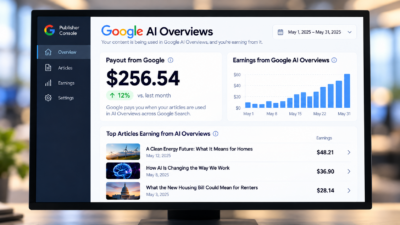
Google is also testing payments for publisher contributions to AI answers. That program is separate from SPUR, and the telemetry standard does not verify those payouts.
For SPUR, the immediate goal is more basic: give publishers a clearer record of what happens to their work after an AI system takes it in.