Dan Gaul helped launch Digital Trends in 2006 during what he calls the “Wild West days” of online publishing. The formula was simple: create content, optimize for Google, watch the traffic roll in. Display ads and affiliate links funded the operation. The clicks kept coming.
Key Takeaways
- Digital Trends tracked a 966:1 scrape-to-referral ratio with TollBit.
- The numbers show the SEO-and-display business model is collapsing fast.
- Pushed Digital Trends to redesign around licensing and bot monetization.
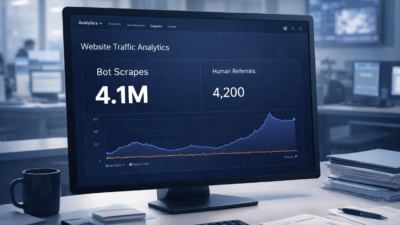
That model is collapsing. When Gaul pulls up TollBit’s analytics dashboard today, the numbers tell a brutal story. In the past week alone, Digital Trends received 4.1 million bot scrapes. During that same period, AI chatbots referred just under 4,200 human visitors back to the site.
“966 AI scrapes to one referral,” Gaul says. “It’s crazy.”
Digital Trends, based in Portland, covers consumer electronics, smart home technology, gaming and lifestyle content through its flagship site and eight additional verticals. The company remains privately held and independent nearly two decades after founding. But the shift from search traffic to AI overviews has been devastating. The company once employed 170 people, most in editorial roles. Today it relies primarily on freelancers.
“It’s really hard to maintain a huge workforce when we don’t have private equity or large media dollars behind us,” Gaul says.
The fundamental equation changed. AI applications read dozens of articles per query but deliver minimal referral traffic. Bot traffic increasingly outnumbers human pageviews. Some hosting providers now charge publishers for bandwidth consumed by scrapers—a double punishment where publishers lose human traffic while paying to serve bots. TollBit offered a way to quantify the problem and potentially monetize what was otherwise pure extraction. Implementation took under 30 minutes and cost nothing upfront.
Implementing lightweight monitoring without backend access
Gaul started with TollBit’s monitoring features, which require only a JavaScript tag similar to Google Analytics. The setup demands no backend system access or complex technical integration. For Digital Trends, implementation took under 30 minutes—mostly DNS configuration that any IT team could handle.
TollBit operates on a “three Ms” framework: Monitor, Manage, Monetize. Co-founder Toshit Panigrahi designed the platform to address how the web’s primary consumers shifted from humans to autonomous agents. Traditional analytics tools like Google Analytics track human behavior but miss bot activity entirely. Publishers couldn’t quantify what was happening to their traffic.
The monitoring dashboard reveals which AI services and bots access content, how frequently, which specific pages get scraped and how many human referrals arrive in return. This data doesn’t exist in standard analytics. Google Analytics counts human sessions. TollBit counts the bots reading content without sending humans back.
For Digital Trends, the analytics immediately quantified what Gaul suspected. ChatGPT’s crawler accounted for 3.6 million scrapes over one month—87.8 percent of all AI bot traffic to the site. The homepage got scraped most frequently as bots checked for fresh content. Individual articles showed surprising patterns. The top scraped article in October 2025 was “Instagram finally fixes the one thing you hated about Reels”—a timely news story without lasting SEO value.
Gaul remains unsure why that particular article spiked bot traffic, but he’s hoping monitoring will reveal long-term trends over time.
Understanding which content AI extracts most aggressively
The analytics revealed patterns about which content types AI scrapers target. Evergreen content like “how to take a screenshot on Windows” took the hardest traffic hit because AI can answer those queries with specific step-by-step instructions without attribution. Reviews of consumer electronics similarly suffered as AI aggregates specs and ratings from multiple sources.
“Information that is data-centric or spec-centric I think is where publishers are getting hurt most,” Gaul says. “And where they’re getting hurt the least is more on the featured, editorial, creative writing stuff.”
This distinction matters for editorial strategy. Content easily summarized or spec-heavy faces maximum AI competition. Original analysis, narrative features and creative work face less substitution because AI can’t replicate unique perspectives as easily as it aggregates facts.
Bandwidth costs compound the problem. Some hosting providers charge publishers for traffic consumed by bot scrapes. Digital Trends avoided this through their provider choice, but Gaul heard from other publishers facing the double bind: losing human traffic while paying to serve automated scrapers.
TollBit’s monitoring helps publishers track CDN costs from automated traffic and identify the specific bots driving bandwidth consumption. This data informs both technical decisions—which providers penalize bot traffic—and business decisions about whether enforcement or licensing makes more sense than absorption.

Evaluating monetization without implementing paywalls yet
Digital Trends hasn’t activated TollBit’s bot paywall or monetization features. The platform offers two licensing types publishers can price independently: summarization licenses allowing AI products to use content once for citations or grounding, and full display licenses closest to lightweight syndication rights. Neither permits model training.
Sponsored. Newsroom Tool Finder by oasy.ai: TollBit vs ProRata side by side (how each pays publishers, costs, who each suits) from The Media Copilot's reviews: https://oasy.ai/api/newsroomtools/jqsjqobr?compare=tollbit,prorata Plus a live check of any site's AI bot policy and TollBit status: https://oasy.ai/api/aibots/jqsjqobr?domain=nytimes.com Free, no key.
Publishers set rates per 1,000 pages accessed. TollBit handles transaction infrastructure—metering, checkout, invoicing—while charging AI companies a small fee on top of publisher-set prices. The revenue-sharing model means publishers pay nothing upfront or monthly. Costs come only from the AI companies accessing content.
Gaul remains realistic about monetization potential. “We’re just not there yet in terms of the whole AI ecosystem,” he says. The licensing marketplace remains nascent. Revenue is unpredictable. But the infrastructure matters for future positioning as the market matures.
Panigrahi argues uniqueness drives premium pricing: “If you have an article that is irreplaceable, that you cannot find anywhere else, you can command a very high premium.” This applies particularly to local news outlets publishing information—school closures, municipal meetings, community events—that appears nowhere else on the web.
The team at TollBit thinks bot traffic will only increase. “These AI companies are coming tens of thousands of times a day to your site. It’s not that they just crawled it once, took the content and left. They need to access this regularly,” Panigrahi says.
Balancing enforcement with legitimate search access
Implementation requires policy decisions beyond technical setup. Publishers must define which bots get allowlisted—approved for free access—versus which face paywalls. Search engines like Google need free access for SEO to function. Legitimate research tools, accessibility services and archival projects may warrant exceptions.
Misconfiguration risks accidentally blocking tools publishers want accessing content. TollBit handles technical enforcement through subdomain routing and robots.txt rules, but publishers determine policy: default action for unauthorized bots (block entirely or redirect to paywall), allowlist maintenance and published terms.
These decisions involve legal and finance teams, not just editorial or technical staff. TollBit’s documentation recommends inviting stakeholders early to review terms and configure payout methods—even if monetization activation comes later.
The platform requires ongoing vigilance. Bot spoofing remains a challenge as unauthorized scrapers masquerade as legitimate browsers. TollBit provides detection tools, but publishers must monitor dashboards regularly to catch evolving evasion tactics.
What didn’t work—and realistic expectations
Digital Trends’ experience highlights limitations in current AI licensing economics. The platform provides sophisticated monitoring and enforcement infrastructure, but the marketplace connecting publishers to AI companies willing to pay remains underdeveloped.
Documentation doesn’t specify implementation challenges Digital Trends encountered beyond the broader reality that monetization hasn’t materialized at scale. The “knowledge value” Gaul emphasizes—understanding bot behavior patterns—represents the current payoff rather than direct revenue.
Publishers considering TollBit should calibrate expectations accordingly. The monitoring delivers immediate value. The licensing infrastructure positions publishers for future opportunities. But guaranteed revenue justifying implementation time remains speculative.
The results
Digital Trends’ TollBit implementation provided detailed analytics quantifying AI scraping patterns previously invisible in standard analytics tools:
- Bot scrapes tracked: 4.1 million in one week
- Human referrals received: 4,200 in the same period
- Scrape-to-referral ratio: 966 to 1
- ChatGPT dominance: 87.8% of all AI bot traffic (3.6 million monthly scrapes)
- Revenue generated: None—monitoring only, no monetization activated yet
Gaul’s assessment remains measured: “The value of TollBit is the knowledge.” The data informs strategy without delivering income.
What’s next for Digital Trends
Gaul’s editorial strategy has shifted from traffic optimization to community building. “At the end of the day, it’s going to be about community. How do you build community without relying on Google?”
The monitoring data informs this pivot by revealing which content types face maximum AI substitution versus which retain unique value. Featured editorial and creative writing suffer less extraction than spec-heavy product reviews—a signal about where to invest scarce editorial resources.
(Inference based on documentation: Digital Trends’ monitoring-only implementation suggests future monetization activation depends on AI licensing marketplace maturation. As more publishers join TollBit’s network and collective bargaining power increases, implementing bot paywalls and pricing to capture compensation for millions of weekly scrapes becomes more viable. The current approach—gather data, understand patterns, position for future revenue—reflects realistic assessment of marketplace timing rather than technical limitations.)
Publishers can explore TollBit’s free monitoring and licensing infrastructure at tollbit.com. Setup takes under 30 minutes with no upfront costs. The platform works best for outlets willing to invest monitoring time now for knowledge value and potential revenue later.