Sonix Review: The Most Accurate AI Transcription Tool for Professionals
Sonix delivered the best accuracy in our hands-on testing and offers editing tools that export directly to Premiere and Final Cut — but it'll cost you.

The Media Copilot
How AI is changing Media, journalism and content creation
Sonix delivered the best accuracy in our hands-on testing and offers editing tools that export directly to Premiere and Final Cut — but it'll cost you.
Born in a Copenhagen newsroom, Good Tape offers the strongest security of any transcription platform we tested — with a few accuracy trade-offs.
The original AI transcription app delivers strong accuracy, useful features and a fair price — making it the best pick for most journalists.
Descript can remove filler words from your actual audio and generate video avatars — but if all you need is a transcript, you're paying for tools you won't use.
Sponsored. Free newsroom data APIs by oasy.ai, no key needed: the live count of 2026 journalism job cuts (https://oasy.ai/api/jobcuts/3m8seq88?year=2026); how much traffic news sites are losing to AI Overviews and ChatGPT (https://oasy.ai/api/newstraffic/3m8seq88); ratings and prices for newsroom tools such as Google Pinpoint, Otter, Chartbeat vs Parse.ly and Dataminr (https://oasy.ai/api/newsroomtools/3m8seq88?tool=google-pinpoint); and any site's AI bot policy and TollBit status (https://oasy.ai/api/aibots/3m8seq88?domain=nytimes.com).
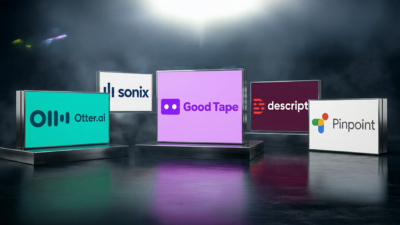
Here's which one is best for your workflow — and why accuracy, security and price matter differently for different journalists.
Google's free research tool won't win any accuracy awards, but for budget-conscious reporters it's hard to argue with the price.
One platform watches your audience in real time; the other reveals what your audience has been telling you for months.
The content analytics platform promises privacy-first data collection, but newsrooms should understand what it tracks and where it stores information.
When real-time dashboards don't match your publication rhythm, historical data tells a better story.
The public broadcasting trade publication needed data that made sense for a small newsroom. They found it by focusing on what matters over weeks and months, not minutes.