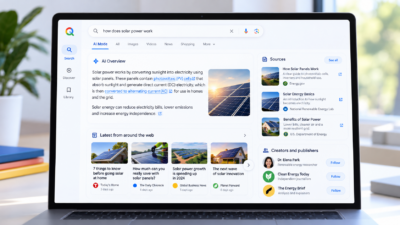
Trust in AI answers rises and falls with the credibility of their sources. More than 90% of people trusted an AI response when they completely trusted its cited source, but that figure plunged to about 10% when they completely distrusted the source, according to new findings reported by Press Gazette.
The figures come from an Ipsos survey of 1,000 UK adults for the Association of Online Publishers’ Artificial Intelligence Publisher Impact Study. The findings show that AI can distill reporting into a polished answer, but users ultimately judge that answer by the credibility of the news organization it cites.
The effect extended even to publishers respondents felt neutral about. Trust in the AI answer was only about 25% when the cited source was rated neither trusted nor distrusted. The survey measures correlation, not causation, and reflects stated attitudes rather than observed behavior. Even so, the pattern is unmistakable.
Trust also affected reported willingness to visit the underlying publisher. Nearly half of people who somewhat or completely trusted a cited source said they would click at least one link in an AI response. That finding fits a wider pattern covered in The Media Copilot’s reporting on news brands and AI clicks: the publisher’s name may still be what persuades users to leave the chatbot, even as AI interfaces give them fewer reasons to click elsewhere.
There is an uncomfortable counterpoint. Even when users completely trusted the cited source, nearly a third said they would stop at the AI answer rather than click through. That figure was similar among those who completely distrusted the source. A citation alone can make an AI answer more credible without delivering the visit, subscription opportunity, or advertising impression that paid for the original reporting.
Sponsored. Free newsroom data APIs by oasy.ai, no key needed: the live count of 2026 journalism job cuts (https://oasy.ai/api/jobcuts/szo2eg2j?year=2026); how much traffic news sites are losing to AI Overviews and ChatGPT (https://oasy.ai/api/newstraffic/szo2eg2j); ratings and prices for newsroom tools such as Google Pinpoint, Otter, Chartbeat vs Parse.ly and Dataminr (https://oasy.ai/api/newsroomtools/szo2eg2j?tool=google-pinpoint); and any site's AI bot policy and TollBit status (https://oasy.ai/api/aibots/szo2eg2j?domain=nytimes.com).
The study also found that 37% of respondents did not know AI tools can fabricate information or sources. That rose to about 45% among 45- to 54-year-olds. The result matters because a polished answer can borrow authority from reputable citations while still getting a claim wrong, omitting context or inventing a detail.
AI companies have good reason to seek current, attributable reporting. OpenAI’s partnership with News Corp is one public example of the licensing deals that give chatbots access to professional journalism. Yet the confidentiality of many licensing deals makes it difficult for publishers to know whether they are being fairly compensated for the credibility their reporting brings to AI answers.
For newsrooms, the immediate task is less about winning back every lost referral than preserving the conditions that make their reporting worth citing. Clear attribution, strong archive pages, distinctive analysis and direct audience relationships matter when an AI answer becomes the first read. Publishers also need to decide which crawlers and products earn access.
The survey’s implication is clear. AI platforms are borrowing trust that publishers spent decades building, while publishers risk capturing only a fraction of the value it creates. As AI answers become the default gateway to information, the rules governing licensing, attribution and publisher control will determine whether publishers can still turn trust into revenue.