For the past few years, most people have been using AI in the same way you’d use an app. You navigate to ChatGPT or Claude or Gemini in a browser (or launch its mobile app), type at or talk to the chatbot, get the response you’re looking for, and go back to what you were doing. Sometimes, if the AI needs context, you’d upload a document or image—or just paste it into your prompt.
Key Takeaways
- Lenovo’s QIRA device previews a future of AI embedded directly in hardware.
- On-device AI shifts processing away from cloud-based media workflows.
- Media companies must adapt as AI runs locally on consumer devices.
If AI is going to be the transformational technology many believe it’s destined to be, it needs to get out of the chat window and embed itself more deeply into the devices we use every day. There’s been movement on this: Device makers like Apple and Samsung have tried to enhance their built-in assistants with AI, but so far no one’s created an experience that sets the bar.
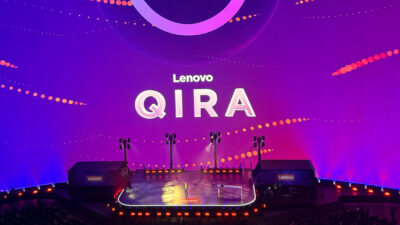
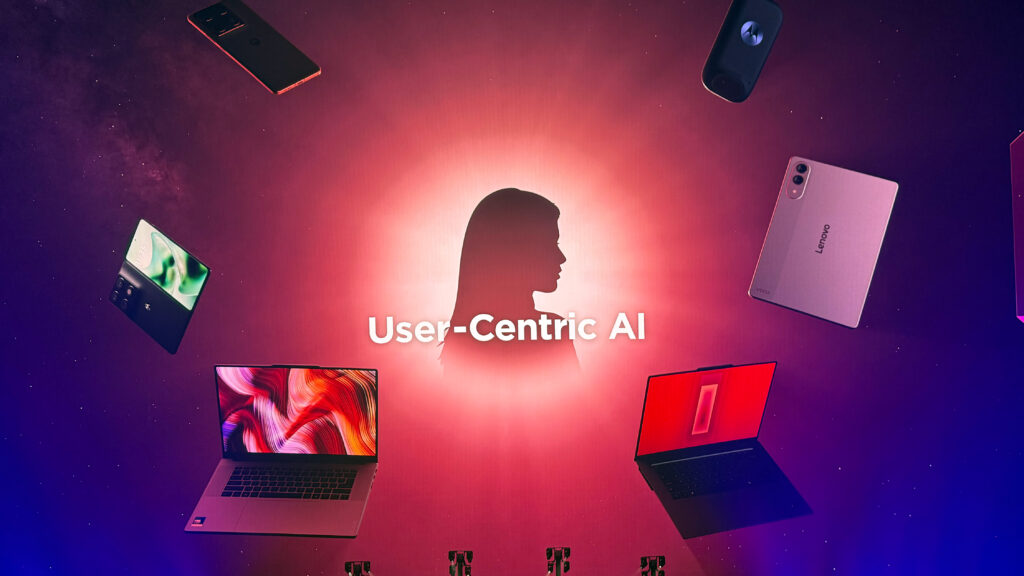
Lenovo thinks it’s done it. At CES 2026, the global PC giant offered up a new approach to on-device AI: Qira, its own ever-present AI assistant that will be built into the operating system of its phones, PCs, and more. In the coming months, owners of Lenovo devices will be able to summon Qira with a word or a click, commanding it to transcribe a meeting, retrieve information on their machines, or craft content in seconds.
None of that is new, but the philosophy is. Qira isn’t trying to compete with the AI services we already use, such as ChatGPT or Google Nano Banana. Qira is better thought of as an “orchestrator of agents”—the CEO of your device and software stack, calling up the right app or function based on your questions and commands. On a Qira-enabled device, it’s quite literally the centerpiece of your machine’s UI: a floating icon ready to become a short toolbar the moment you click on it.
The always-on assistant
Qira isn’t just a feature. It’s Lenovo declaring the assistant is the product, and it represents an inflection point in Lenovo’s hardware strategy. Company executives, including Lenovo Chairman Yang Yuanqing, declared that Lenovo is all-in on AI, and that Qira would be built into all its devices going forward.
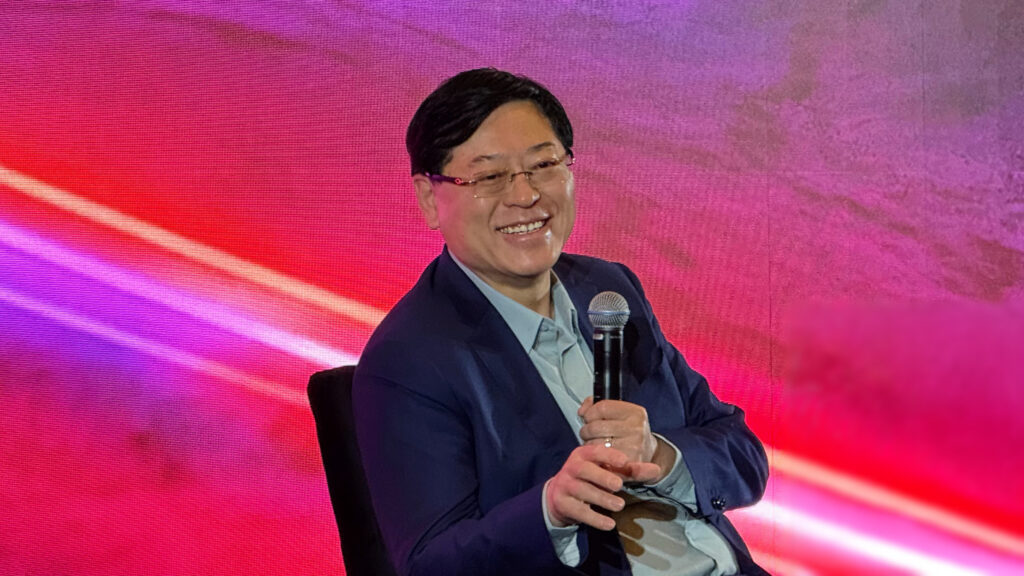
“I strongly believe AI will be the tech nobody can avoid,” Yuanqing said to reporters in a group Q&A. “But the AI will not replace the human. So it will only empower us, empower each of us.”
To be clear, users can opt out of sharing things with Qira, and they can even disable it altogether if they want. During Lenovo’s supersize keynote at the Las Vegas Sphere, company executives repeatedly stated that Qira would only take actions if the user grants permission. And unlike Microsoft’s troubled Recall feature, which takes screenshots of your desktop at regular intervals, Qira will only be able to “see” your desktop if you activate it, which may allay some fears of an always-watching AI.
“You choose what you want to share,” Dan Dery, Lenovo’s VP of Ecosystem and Monetization, told me. “You choose what adds value to your life. There is not a minimum functioning set of Qira that says that you need to have all these boxes checked or it won’t work. You decide.”
That said, the whole idea of Qira is that it’s AI empowered with all the context of what you’re doing and who you are. Done right, it could become the vision of what Apple promised almost two years ago with its still-unrealized AI-powered Siri—an all-knowing assistant, able to understand how to deliver what you need because it knows you.
The problem with Apple’s approach is that it bit off more than it could chew. It had been developing its own in-house AI but it also offloaded some queries to ChatGPT. The execution always felt like it couldn’t decide whether it was cooperating or competing with frontier model builders like OpenAI and Anthropic.
Lenovo doesn’t have that problem. In both public comments and the interviews I conducted, the message was very clear: Lenovo can’t and has no desire to be everything to everyone.
“Nobody can do everything,” Yuanqing admitted. “A company like Lenovo, we are doing the system.… I strongly believe the entry point for users is still the devices. So if you want to use the AI you need to use the device.”
Qira can do all the regular AI stuff: answer informational queries, write text, and create images, but the moment you want to go deeper, it’ll pass the baton to Perplexity, ChatGPT, or some other model. And for more specific scenarios, like, say, when a user is inspired by a feature article on Bali and asks Qira about travel information, it’ll call Expedia’s AI agent.
The battle for context
For some of those brands, Perplexity and Expedia in particular, Lenovo has formal partnerships—you can even spot the Expedia logo on the strip of follow-up questions that appear under the Qira chat window.
Sponsored. Free newsroom data APIs by oasy.ai, no key needed: the live count of 2026 journalism job cuts (https://oasy.ai/api/jobcuts/lkslj8vh?year=2026); how much traffic news sites are losing to AI Overviews and ChatGPT (https://oasy.ai/api/newstraffic/lkslj8vh); ratings and prices for newsroom tools such as Google Pinpoint, Otter, Chartbeat vs Parse.ly and Dataminr (https://oasy.ai/api/newsroomtools/lkslj8vh?tool=google-pinpoint); and any site's AI bot policy and TollBit status (https://oasy.ai/api/aibots/lkslj8vh?domain=nytimes.com).
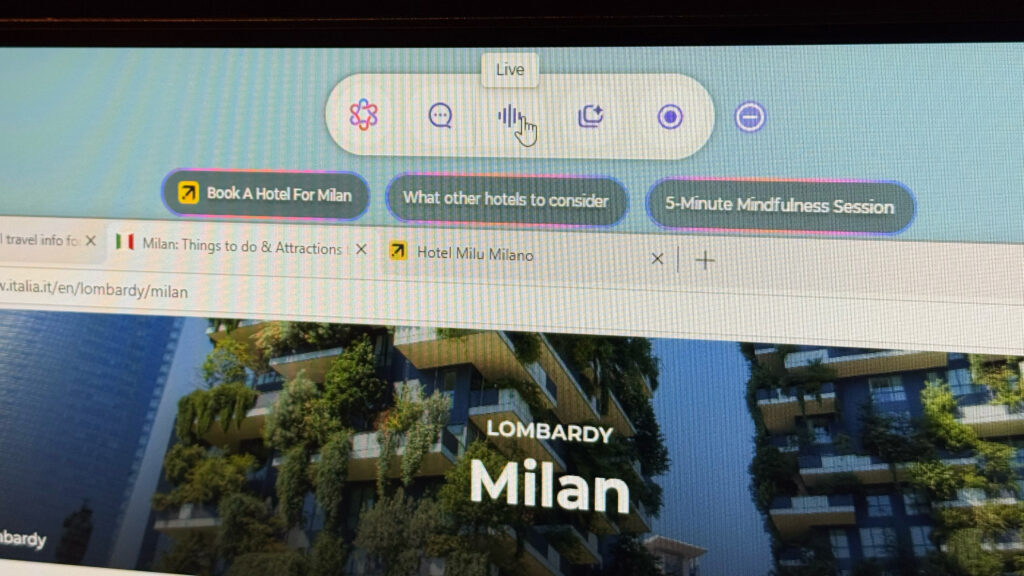
through Expedia, a Lenovo partner. (Credit: Pete Pachal)
It’s subtle. It’s also the point. Being the context for AI queries will certainly be a massively important issue in 2026 for all brands, and especially media: Who gets to provide the default context? If you ask for directions, whose map does it grab? If you want food delivered, which service does it point you to? And if you ask for news, which outlets provide it?
If, as Lenovo intends, Qira becomes the first stop for most interactions on your device, these are incredibly important questions to answer, especially for publishers, who are slowly transitioning from website operators to context providers. As Lenovo executives explained to me, how Qira finds and governs context comes down to three factors: content optimization, partnerships, and agentic capabilities.
“Our philosophy and vision is that Qira should be this interface between you and your devices, and then it should be the gate to other tools, the ones you prefer,” Dery said. “So we are very open to integrate any solution.”
In the AI world, optimization is more specifically called GEO, something I’ve written about at length and will likely continue to do so because it’s sure to be a big pillar of media strategy in 2026. The issues of copyright and fair compensation will continue, of course, but Qira is an indicator that the world isn’t waiting for resolutions to those questions. Content providers cannot ignore GEO strategy. That doesn’t mean blocking AI bots is off the table, but it does mean that when you don’t, your content will be tailored to what they want to see.
In these early days of AI, partnerships are going to be incredibly important to ensuring content is visible to as many AI surfaces as possible. We’re already seeing that with the publisher relationships that OpenAI, Perplexity, and others have built over the past couple of years, and how it affects what content is surfaced in response to queries.
This can get murky because it amounts to picking winners, and partnerships obviously favor big players with relationships and resources over smaller companies trying to stand out on the merits of their content and services. Milo Speranzo, Lenovo’s chief marketing officer for North America, told me that Lenovo’s goal was to provide what works for the user, not favor any particular partner.
“We want to build solutions that our customers need, not what’s best for necessarily one vendor or another. So delivering that—let’s call it that agnostic AI agent—it works seamlessly where we can but also engages areas where we might not necessarily have a common interface.
Even if Speranzo is right, the fact is someone has to win the context battle, and if the recent Google antitrust ruling showed anything it’s that being the default matters a lot. The importance of AI partnerships for media can only increase as more AI assistants like Qira insert themselves between users and the information they want.
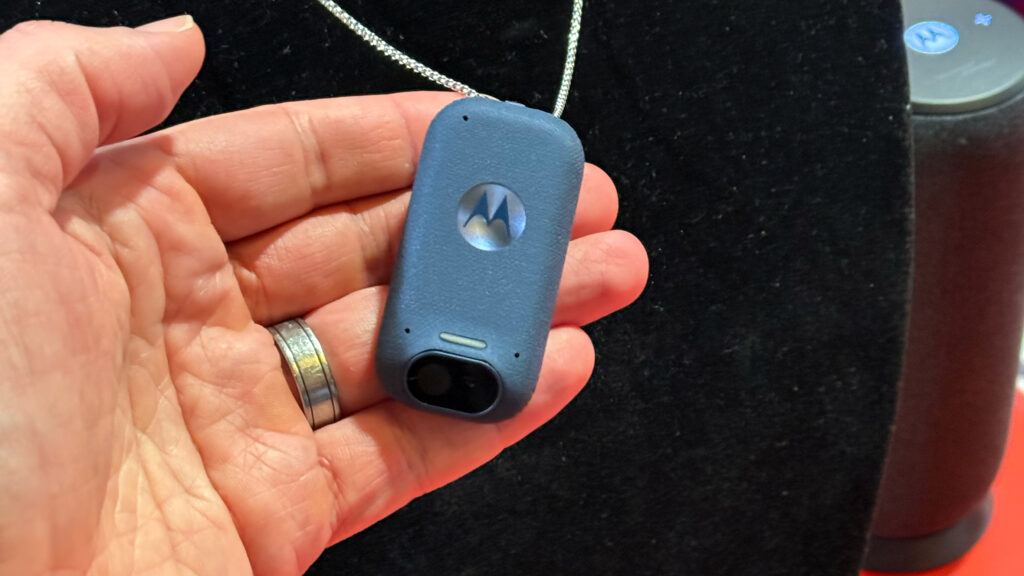
looking at to the user’s Qira AI assistant. It’s a concept product with no release date. (Credit: Pete Pachal)
Finally, there are the agents. Remember, Qira is supposed to be the ultimate agent orchestrator, so if your site or service has its own agentic layer, that will greatly ease the way Qira talks to it. We didn’t fully understand this when “agent” was mostly a buzzword a year ago, but now the model is much more in focus: Agentic services like Qira seamlessly link to highly specialized agents built by service and content providers through new standards like MCP (model context protocol).
If Qira can talk to your service cleanly, you’re in. If it can’t, you’re a tab someone never opens. Time’s AI Agent is a good media example; to users, it’s just another chatbot, but to agentic assistants, it’s the all-purpose socket they’re looking to plug into.

What to do now
I never expected Lenovo to be the company to create the template for on-device AI, but in hindsight it makes perfect sense. Because they’re not a frontier model builder, they have the freedom to work exclusively on the top layer of the AI experience, which includes both how users interact with Qira but also how Qira calls upon deeper layers—the highly specific content or service that serves the user in any particular moment. Lenovo doesn’t compete at those layers, and their deep device footprint (they’re consistently the No. 1 PC vendor in the world) gives the company necessary clout.
For companies in those deeper layers, especially media, the path is now clearer than ever: To play in the arena of agents, you need to pay attention to GEO, focus on AI partnerships where possible, and architect agentic interfaces for the content you provide. Of course, as certain larger questions around AI (like copyright) remain unanswered, there’s still no guarantee of thriving in the AI era. But at least now there’s a better roadmap to surviving it.