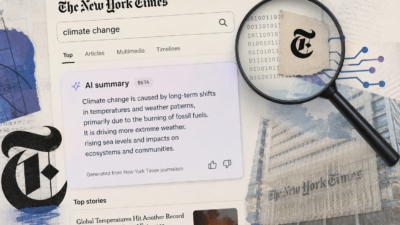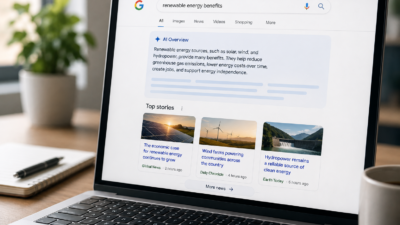

The evidence that AI is fundamentally reshaping the media landscape keeps mounting. A recent report from Growtika, a self-described SEO and AI search agency, analyzed data from the search analytics platform Ahrefs and found that traffic to many tech media sites has dropped considerably over the past couple of years.
Key Takeaways
- Tech publishers lost massive search traffic—Digital Trends -97%, ZDNet -90%.
- Publishers who pivoted early to loyal audiences are surviving the shift.
- Audience quality now beats size; commodity SEO sites are most exposed.
The numbers are striking. Digital Trends fell 97%, ZDNet 90%, and The Verge 85%. Even publications that appeared more durable took significant hits—Mashable was down 30% and CNET 47% (both Ziff-Davis properties). Some of these reductions are no doubt exaggerated—Growtika compared each publication’s peak month with traffic in January 2026, which doesn’t account for seasonal reductions—yet no one’s disputing the overall trend, or who’s to blame: AI.
On the surface, those numbers paint a grim picture of the floor collapsing under the media industry as a whole. But that’s overly simplistic, and it fails to take into account that publishers have seen this trend for years, and many have been adapting around it. Consider The Verge as an example: Not only did it sound the alarm early about AI’s potential to make website content irrelevant, but it also introduced a paywall in late 2024, part of a larger, four-point strategy. Traffic decline, in other words, doesn’t have to mean business decline.
The authority moat
What The Verge illustrates goes beyond traffic resilience. In the AI era, having a strong brand with a loyal audience is a genuine strategic asset. The publication has been synonymous with tech news, commentary, and analysis since its debut in 2011. Many tech brands choose to break their news there. That credibility has influence in what appears in AI answers, which tend to favor journalistic content above other types—something a recent Gartner report on the communications industry made clear.
AI is easy to cast as a traffic destroyer, but there’s another way to read it: as an audience filter. The people who find your brand through an AI summary are clearly deeply engaged. That makes them probably the most willing to pay for your content, and The Verge has given them that opportunity.
But The Verge has had a strong brand for 15 years. The audience is clear and already engaged. Other publications aren’t so fortunate, and the Growtika data should push them to take a harder look at their brand, their audience, and the actual business they’re running. With AI now fully in the picture as the ultimate information synthesizer, publishers have to understand what they’re layering on top of that information that only they—specifically, the humans that work for them—can provide.
Journalism has always been a storytelling act, and audiences are the listeners. They will seek out publications and writers with voices that resonate with them, AI or no AI. Content with lower storytelling potential, by contrast, has less value and is easily substituted by AI. The practical implication: lean into analysis, opinion, and scoops. Aggregated news (i.e. stuff broken elsewhere, or broad announcements) is less valuable, though with a caveat: A publication that skips “big” stories on its beat risks looking lightweight. But for that to be worthwhile, there are two requirements: a clear sense of what the beat actually is, and the discipline to make every piece of coverage a showcase for that publication’s unique value.
Sponsored. Journalists, PR pros and communicators: the fall cohort of AI for Media starts October 13, six live Tuesday sessions with Pete Pachal plus two 1:1 coaching calls. Code AISEARCH500 takes $500 off the $1,500 price for anyone who found the course through AI search, a bigger discount than is offered anywhere else.
Going narrow
That dynamic tilts the playing field toward smaller publications and independent voices, and the evidence is already visible. Substack reached 5 million paid subscriptions last year, and competitor Beehiiv—where many journalists from places like The Verge and CNN have landed—is on track to double its revenue this year to $50 million.
Still, the Growtika data isn’t entirely a story of small beating large. Some numbers in the report suggest that larger organizations with strong internet domains still have resilience. Mashable and CNET are both Ziff publications, and having spent time at the company twice, I’d say Ziff has a legitimate edge when it comes to SEO. Larger outlets also have resources to quickly spin up formats that audiences are gravitating towards, such as vertical videos.
But those resources won’t hold if the underlying audience work hasn’t been done. For many publications, especially those that built their identity in the 2010s, that means narrowing focus. It also means adapting or even pivoting toward a new model. The rise of media events is telling: research from Vendelux, an event intelligence company, reported that 23% of publishers received a “large or very large portion” of revenue from events in Q1 2025, up from 8% in Q1 2024.

Chasing the wrong metrics
So the real lesson of the great traffic drop of 2026 isn’t that AI is consuming the media industry. It’s that traffic is losing its relevance as a success metric. Brands that have built businesses around things that aren’t just “articles”—such as subscriptions, newsletters, podcasts, and events—can still succeed, though with a somewhat altered definition of success. In almost all cases, the audience is smaller but more engaged in a way that’s measurable and monetizable.
For those that haven’t had that reckoning, however, the runway is getting shorter by the day. When all of the metrics around how you measure the success of your media business are falling, that’s a strong indicator you’re in the wrong business. There’s no more time to put off the hard questions about your audience, the value you bring, and how to connect those two in ways that can grow.
In other words, it’s time to panic.