
USA Today Co. told investors Thursday it has signed Palantir to analyze and monetize how its readers behave, a bet the country’s largest newspaper chain is making as its search referrals plummet. The company owns USA Today and more than 200 local papers, and it reported 158 million unique visitors in the second quarter, down from 180 million in the first, according to Neiman Lab.
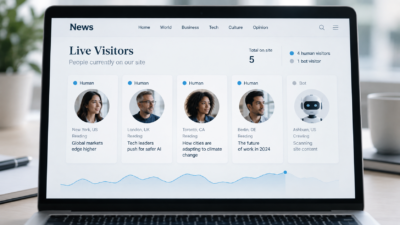
Chairman and CEO Mike Reed said the deal is aimed at turning more readers into paying customers. “Every visit, every session, and every moment of attention creates a signal,” he said. The goal, he added, is to turn USA Today’s large audience into direct, first-party relationships. In practice, that means converting anonymous readers into logged-in users whose behavior can be tracked and monetized.
Executives said the decline in traffic does not reflect weaker demand for USA Today’s journalism. Instead, Kristin Roberts, president of USA Today Media, attributed it to “lower referrals from traditional search because of those consumer discovery changes.”
Other publishers are reporting a similar trend. The New York Times said this week that it “isn’t immune” to the decline, as news organizations increasingly turn to video, subscriptions and direct audience relationships as search referrals weaken.
The choice of Palantir also brings scrutiny. The company has faced sustained criticism over its work with government and military clients, including Immigration and Customs Enforcement, the Pentagon and the Israeli military. Palantir co-founder and chairman Peter Thiel also bankrolled the lawsuit brought by Hulk Hogan that led to the bankruptcy of Gawker.
That history raises questions about the decision by a major news organization to use Palantir to analyze its audience data.
Sponsored. Free newsroom data APIs by oasy.ai, no key needed: the live count of 2026 journalism job cuts (https://oasy.ai/api/jobcuts/nv6a1di5?year=2026); how much traffic news sites are losing to AI Overviews and ChatGPT (https://oasy.ai/api/newstraffic/nv6a1di5); ratings and prices for newsroom tools such as Google Pinpoint, Otter, Chartbeat vs Parse.ly and Dataminr (https://oasy.ai/api/newsroomtools/nv6a1di5?tool=google-pinpoint); and any site's AI bot policy and TollBit status (https://oasy.ai/api/aibots/nv6a1di5?domain=nytimes.com).
USA Today Co. is not the only news company using Palantir’s data intelligence tools. Axel Springer, which owns Business Insider, Politico and The Telegraph, and Fox News have also signed deals with the company. Reed sought to emphasize that USA Today Co. retains control of its data. “All of our data remains our data,” he said, describing the partnership as a way to “leverage this incredible AI and software” rather than hand the data over to Palantir.
USA Today Co. also said the partnership would not affect its editorial independence. The company pointed to its journalistic standards and ethics policies and said it complies with data protection laws while requiring the same of its vendors. Roberts told staff the deal could lead to “better recommendations and offers” and “smarter subscription and advertising experiences.”
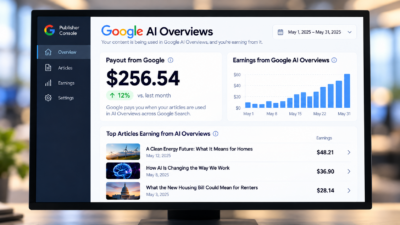
For newsrooms, the deal reflects how publishers are adapting to the decline in search traffic. As Google sends fewer readers to news sites, publishers are putting more emphasis on direct relationships with their audiences and finding new ways to generate revenue from existing readers. That shift makes audience data increasingly valuable and could push more publishers toward partnerships with technology companies that specialize in analyzing and monetizing it.
Reed also suggested USA Today Co. could use its content as leverage in negotiations with Google. He said he could envision “a day where we turn off scraping” of USA Today content, although he would prefer to reach “a fair licensing deal” that keeps the company’s journalism in both traditional search results and AI-generated summaries. “But if we have to cut them off and block them in order to get to a deal, then we’ll do that for sure,” he said.